
Spitzkoppe’s granite domes above Usakos
Published on 08/16/2026 at 13:07 | Editorial responsibility: Rafael Müller, Editor-in-Chief AD HOC NEWS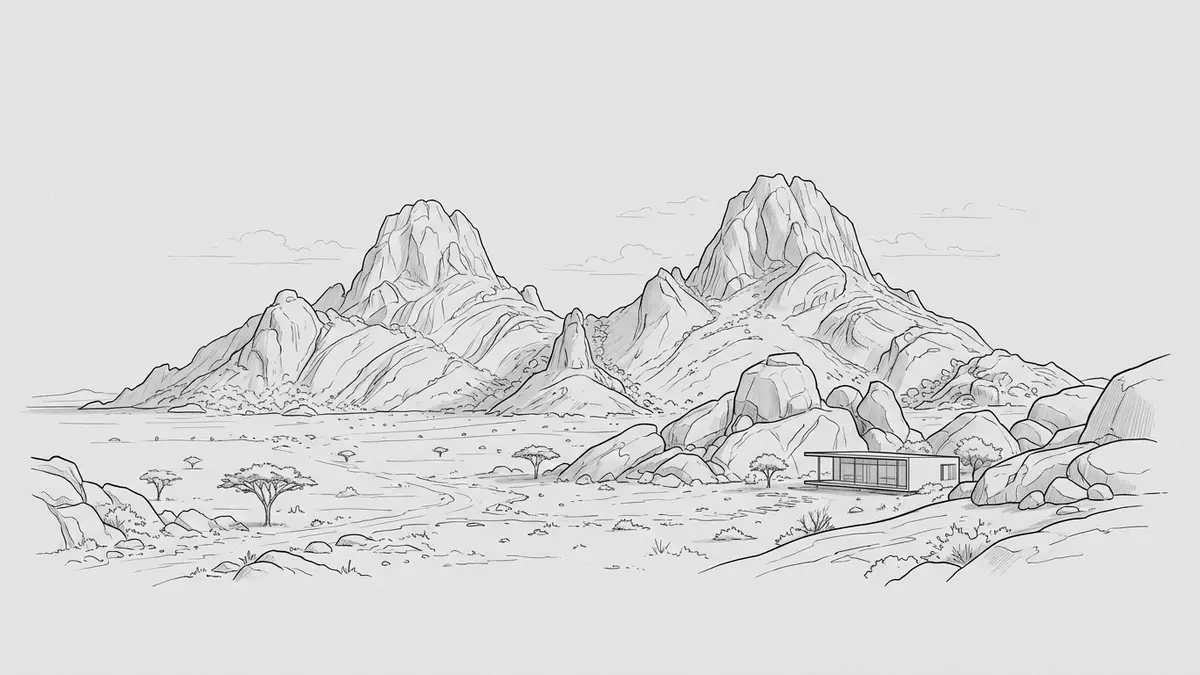
Spitzkoppe rises between Usakos and Swakopmund as a cluster of bare granite peaks in Namibia’s Namib Desert. The main summit reaches 1,728 m (5,669 ft), and the granite is more than 120 million years old.
Granite domes in the Namib desert
The massif is a group of inselbergs, with rounded domes, isolated blocks and steep rock faces set above a flat plain. Its profile is readable from a distance, and the contrast between the granite mass and the open desert is immediate.
The English name “Matterhorn of Namibia” has followed the place for decades, though the mountain group is not a single cone. Spitzkoppe is also linked with the Pontok Mountains, a nearby cluster of granite forms in the same landscape.granite peaks
Rock art and the mountain landscape
Rock shelters and sheltered surfaces around Spitzkoppe hold Bushmen art, adding a cultural layer to the geology. The paintings connect the mountain group with older patterns of movement, shelter and attention in the desert fringe.
The rock surfaces around the base are varied, with boulders, ledges and overhangs breaking the larger forms into smaller spaces. The area has long drawn climbers as well as visitors interested in landscape and archaeology.Bushmen art
Spitzkoppe and the granites of central Namibia
Geologically, Spitzkoppe belongs to the granite intrusions of central Namibia and sits beside other notable massifs such as Brandberg and Erongo. The rock belongs to the Early Cretaceous story of the region, when magma cooled underground and later weathering exposed the harder granite.
That background leaves the place with a clear visual identity: smooth domes, fractured blocks and isolated outcrops set against the Namib. The summit height and the age of the granite are the two facts most likely to anchor any first encounter.Early Cretaceous story
Visiting Spitzkoppe: what travellers from Western Europe should know
- Spitzkoppe lies in central Namibia between Usakos and Swakopmund. The area is reached by road across the Namib Desert, and the mountain group is visible from the plain.between Usakos and Swakopmund
- The terrain is granite, with exposed faces, boulders and uneven ground around the base. The main peak rises sharply above the surrounding floor, and climbing involves exposed rock.
- San rock paintings appear in sheltered places around the mountain group. They make the landscape more than a geological landmark, and they belong to the same desert setting as the peaks themselves.
- The mountain group sits in a dry desert environment. The open plain, dark rock and isolated forms give the place a stripped, elemental appearance.
Searching for Spitzkoppe on social platforms
These links open searches for Spitzkoppe on each platform.
Frequently asked questions about Spitzkoppe
Where is Spitzkoppe?
Spitzkoppe lies in Namibia, in central country east of the coastal belt and near Usakos. It stands between Usakos and Swakopmund in the Namib Desert.
What does a visit involve?
The place is a granite mountain group with open desert approaches, boulders and exposed rock. Rock art shelters add an archaeological layer to the landscape.
What makes Spitzkoppe distinctive?
Its profile comes from isolated granite domes rising from a flat plain. The combination of height, bare rock and older San paintings gives it a strong visual and cultural identity.


