
Stanley Park and Vancouver’s forested peninsula
Published on 09/09/2026 at 07:14 | Editorial responsibility: Rafael Müller, Editor-in-Chief AD HOC NEWS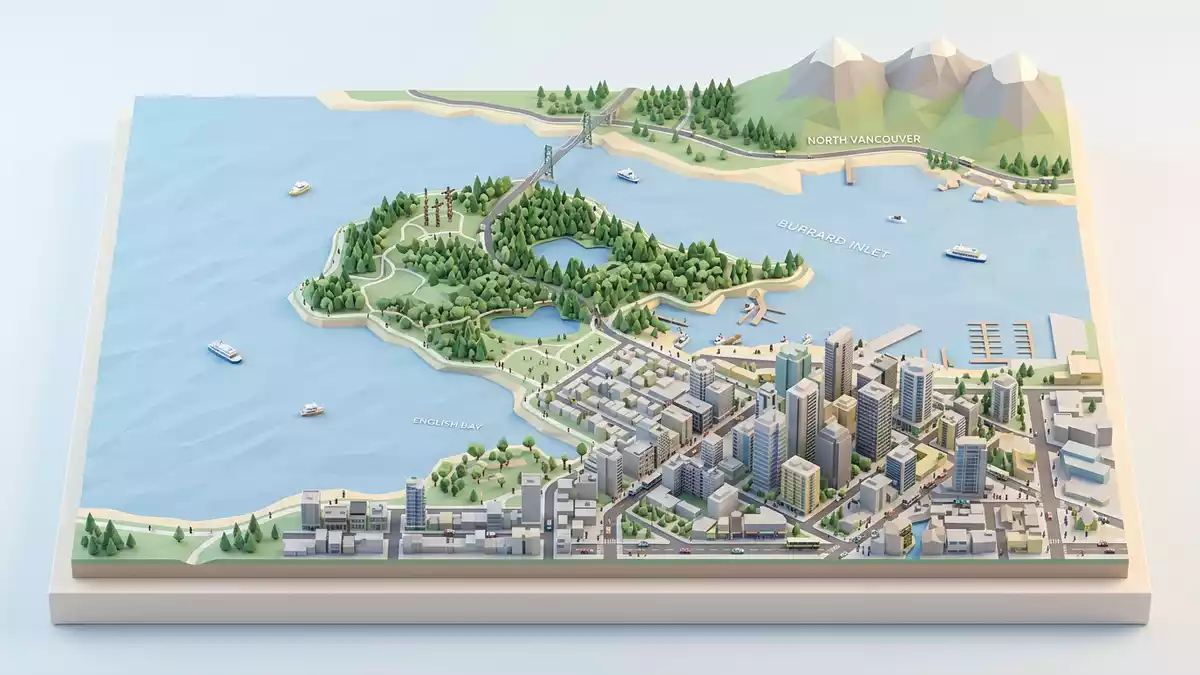
Stanley Park in Vancouver is a large urban park on a peninsula edged by water on three sides. Its mix of forest, shoreline and civic landscape gives the place a strong physical identity, and its national historic site status reflects that blend.
Forest, water and city in one place
The park occupies the north-western end of Vancouver’s downtown peninsula, with English Bay, Burrard Inlet and the First Narrows around it. That setting places a substantial stretch of woodland beside beaches, roads and park buildings.
The canopy is a central part of the scene, but the park is not just woodland. Open lawns, formal gardens and recreational spaces sit among the trees, and the park’s story is tied to that combination of natural and cultural features.
A park shaped by a long public history
Stanley Park opened in 1888 and was named in honour of Lord Stanley, the Governor General of Canada. That date places it among the early large municipal parks of North America, and the name links it to Vancouver’s civic history.
The park was designated a National Historic Site of Canada on 11 November 1988. The designation is attached not only to the forested landscape, but also to the designed elements that were added across the park over time, including gardens, monuments and recreation facilities.
Designed landscapes within a coastal forest
Several parts of Stanley Park show a deliberate contrast between dense trees and shaped parkland. The Lost Lagoon area, the seawall, the rose garden, the Pavilion and the sports grounds all belong to that layered landscape.
The park’s heritage value also lies in its material variety. Granite walls, timber details, bridges, paths and planted areas sit beside bedrock, shoreline and mature trees, giving the park a visibly mixed character.
Visiting Stanley Park: what travellers from Western Europe should know
- The park lies beside downtown Vancouver, with roads, the seawall and the Lions Gate Bridge connecting it to the wider city.
- Its shoreline paths, wooded sections and varied ground make it a place of long walks, level sections and some steeper changes in terrain.
- The park includes gardens, monuments, sports facilities and stretches of forest, so a single visit can move between several types of landscape.
- English is the official language and the currency is the Canadian dollar.
- Entry requirements depend on your nationality; UK travellers can check the FCDO travel advice at gov.uk/foreign-travel-advice, Irish travellers the Department of Foreign Affairs at ireland.ie.
Searching for Stanley Park on social platforms
These links open searches for Stanley Park on each platform.
Frequently asked questions about Stanley Park
Where is Stanley Park?
Stanley Park is in Vancouver, British Columbia, on the peninsula beside the city’s downtown core. English Bay, Burrard Inlet and the First Narrows define much of its edge.
What does a visit involve?
The park combines forest, shoreline and designed grounds, with routes that move between water views, gardens and recreation areas. It is a broad urban landscape rather than a single monument or enclosed garden.
What makes Stanley Park distinctive?
Its scale, setting and layered design give it a clear identity. The park joins mature woodland, civic landscape and historic features within one peninsula.


