
Stanley Park’s forested peninsula beside Vancouver’s harbour
Published on 09/23/2026 at 06:46 | Editorial responsibility: Rafael Müller, Editor-in-Chief AD HOC NEWS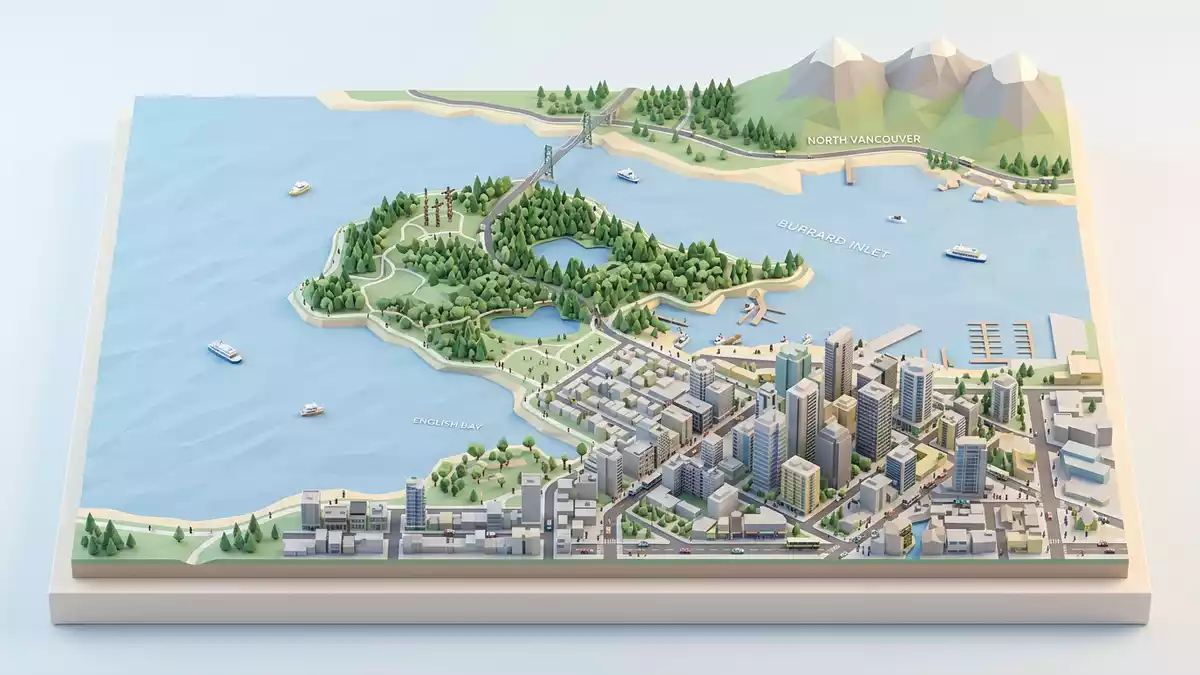
Stanley Park occupies a forested peninsula at Vancouver’s north-western edge, with Burrard Inlet, English Bay and First Narrows surrounding much of it. The city’s streets give way to towering trees, shoreline paths, beaches, gardens and monuments within the same public landscape.
Opened in 1888 and named for Lord Stanley, the park combines a large West Coast forest with a carefully shaped waterfront route. Its visible character comes from that meeting of dense woodland and open water.
Stanley Park between forest and salt water
The park covers about 405 hectares on the north-western half of Vancouver’s downtown peninsula. The surrounding waters place the forest beside shipping routes, beaches and harbour inlets, while the city remains close across the park’s southern edge.
The peninsula contains layers of plutonic, volcanic and sedimentary rock shaped by glaciation and glacial retreat. Cedar, Douglas fir, hemlock and maple form much of the woodland, with trails passing through stands that conceal the scale of the surrounding urban area.
The seawall, beaches and named landmarks
The seawall traces the outer shoreline, linking views across English Bay with rocky points, beaches and harbour entrances. Its Stanley Park section is a paved waterfront route used by walkers and cyclists, separate from many of the forest trails.
Named landmarks give the shoreline a second vocabulary. Siwash Rock rises from the water, while Brockton Point contains a group of Coast Salish totem poles. Prospect Point overlooks the entrance to Burrard Inlet, and the park’s gardens add cultivated spaces among the trees.
The park also contains the Vancouver Aquarium, a miniature railway and other family attractions. Monuments commemorate people, communities and events connected with Vancouver and British Columbia, including Pauline Johnson and Japanese Canadians who served during the First World War.
From Indigenous territory to a public park
Before its public-park history, the peninsula formed part of the traditional territory of Coast Salish Nations, including the Musqueam, Squamish and Tsleil-Waututh. The land also served as a British military reserve before Vancouver established its first public park there.
Stanley Park’s national designation records the park’s development as a major urban landscape between 1913 and 1936. Early superintendent W.S. Rawlings combined woodland, gardens, designed landscapes and recreational facilities.
Lord Stanley formally opened the park in September 1888, two years after Vancouver’s incorporation. The name connects the landscape with Frederick Stanley, 16th Earl of Derby and Governor General of Canada.
The park became a Canadian National Historic Site in 1988. Its history therefore includes Indigenous cultural presence, colonial administration, military use, civic planning and public recreation.
Visiting Stanley Park: what travellers from Western Europe should know
- Stanley Park lies beside Vancouver’s West End and Coal Harbour. City buses reach entrances near Georgia Street, and cycling routes connect the park with the downtown peninsula.
- The seawall is paved, while many inland trails pass over uneven forest ground. Beaches, rocky shorelines and sloping paths occur within the same park.
- The park borders English Bay, Burrard Inlet and First Narrows. Lions Gate Bridge connects the Vancouver side with the North Shore beyond the inlet.
- The official language is English and the currency is the Canadian dollar.
Searching for Stanley Park on social platforms
These links open searches for Stanley Park on each platform.Frequently asked questions about Stanley Park
Where is Stanley Park?
Stanley Park is on Vancouver’s downtown peninsula in British Columbia, Canada. Burrard Inlet, English Bay and First Narrows surround its northern and western sides.
What can visitors expect in Stanley Park?
The park contains forest trails, a paved seawall, beaches, gardens, monuments, totem poles and attractions including the Vancouver Aquarium. Walking and cycling routes cross both woodland and shoreline areas.
What makes Stanley Park distinctive?
Its defining feature is the close combination of a large coastal forest and an open waterfront route. The landscape also contains Indigenous, military, civic and recreational layers within Vancouver.


