
Suomenlinna, a sea fortress across Helsinki’s islands
Published on 08/19/2026 at 21:59 | Editorial responsibility: Rafael Müller, Editor-in-Chief AD HOC NEWS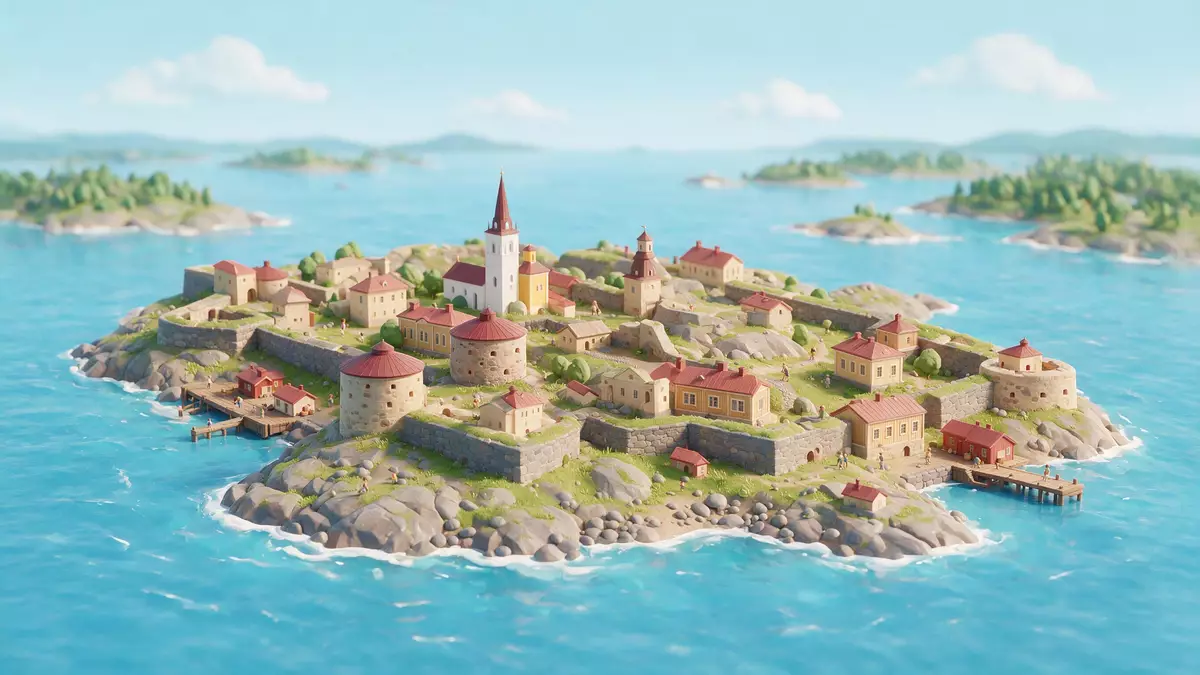
Suomenlinna is a sea fortress spread across low rocky islands off Helsinki, where eighteenth?century ramparts, harbours and residential streets form a single lived?in landscape. Built from 1748 onwards during the Swedish era and inscribed on the UNESCO World Heritage List in 1991, it turns a cluster of Baltic skerries into a maritime district that belongs as much to Helsinki as to the surrounding sea.
A layered fortress across the Baltic islands
Suomenlinna occupies a small archipelago off the southern shore of Helsinki, linked by bridges and causeways that turn several islands into one continuous fortified landscape.The fortress extends over multiple islands Visitors arrive into an island setting where bastion walls, dry docks and shoreline batteries run in long bands above the Baltic, with views back to Helsinki’s harbour and out towards the open Gulf of Finland.
Construction of the sea fortress began in 1748, when Finland formed part of the Kingdom of Sweden and the main concern in this part of the Baltic was defence against Russian expansion.Work on the fortress began in 1748 under Swedish rule The complex was then known by its Swedish name Sveaborg and laid out as a bastion system, with long angular walls, ravelins and shore batteries arranged to control the sea approaches to Helsinki.
From Swedish Sveaborg to Finnish Suomenlinna
The architect and military officer Augustin Ehrensvärd led the early phase of construction, and his bastion lines, barracks and dry docks still set much of the geometry of Suomenlinna’s main islands.Augustin Ehrensvärd directed the initial works The fortress served as a base for the Swedish Archipelago Fleet, which operated among the shallow channels and rocky islets of the Gulf, and many of the masonry walls and earth ramparts date from this eighteenth-century phase.
Control of the fortress shifted in the early nineteenth century, during the Finnish War of 1808–1809, when Russian forces took Helsinki and accepted the capitulation of Sveaborg.Suomenlinna’s history spans Swedish, Russian and Finnish rule Under Russian administration the defences were repaired and extended, and later became part of the wider fortification system guarding the approaches to Saint Petersburg; after Finland’s independence in 1917 the site passed to the new state and acquired its Finnish name Suomenlinna.
A World Heritage fortress that is also a neighbourhood
UNESCO recognised the Fortress of Suomenlinna in 1991 as an outstanding example of European military architecture, in particular the bastion system of the seventeenth and eighteenth centuries.The fortress is inscribed on the World Heritage List Earthworks, stone walls and casemates line the outer shores, while inside the defensive perimeter stand brick barracks, powder magazines and later garrison buildings, many of which have been adapted to civilian uses.
Suomenlinna is not a museum island emptied of daily life but an official district of Helsinki, with housing, workshops and public services woven into the former garrison fabric.The fortress forms a residential district as well as a heritage site Walking along the cobbled streets and through the former parade grounds brings together layers of military history and present-day community, underlining how the fortified islands have remained part of the city rather than an isolated monument.
Visiting Suomenlinna: what travellers from Western Europe should know
- Suomenlinna lies off the southern waterfront of Helsinki and is reached by ferry from the city’s harbour, with boats serving the main quay on the principal island.
- Paths on the islands run over uneven rock, earth ramparts and cobbled streets, and some routes climb gently over the defensive ridges.
- The sea fortress stands within the Helsinki archipelago, and the crossing gives views of both the city skyline and the low skerries around the islands.
- The official language is Finnish and the currency is the euro.
Searching for Suomenlinna on social platforms
These links open searches for Suomenlinna on each platform.
Frequently asked questions about Suomenlinna
Where is Suomenlinna?
Suomenlinna is a sea fortress on islands off the southern coast of Helsinki, in the Baltic Sea just outside the city’s main harbour.
What can visitors expect on a visit to Suomenlinna?
Visitors encounter long earth ramparts, stone bastions, harbours and cobbled streets, together with residential buildings and services that make the fortified islands a lived?in district.
What makes Suomenlinna distinctive among fortresses?
Suomenlinna combines eighteenth?century bastion fortifications, later additions from Swedish, Russian and Finnish periods, and its role as both a UNESCO World Heritage Site and an inhabited part of Helsinki.


