
Tai Shan, the sacred mountain above Tai'an
Published on 08/18/2026 at 14:43 | Editorial responsibility: Rafael Müller, Editor-in-Chief AD HOC NEWS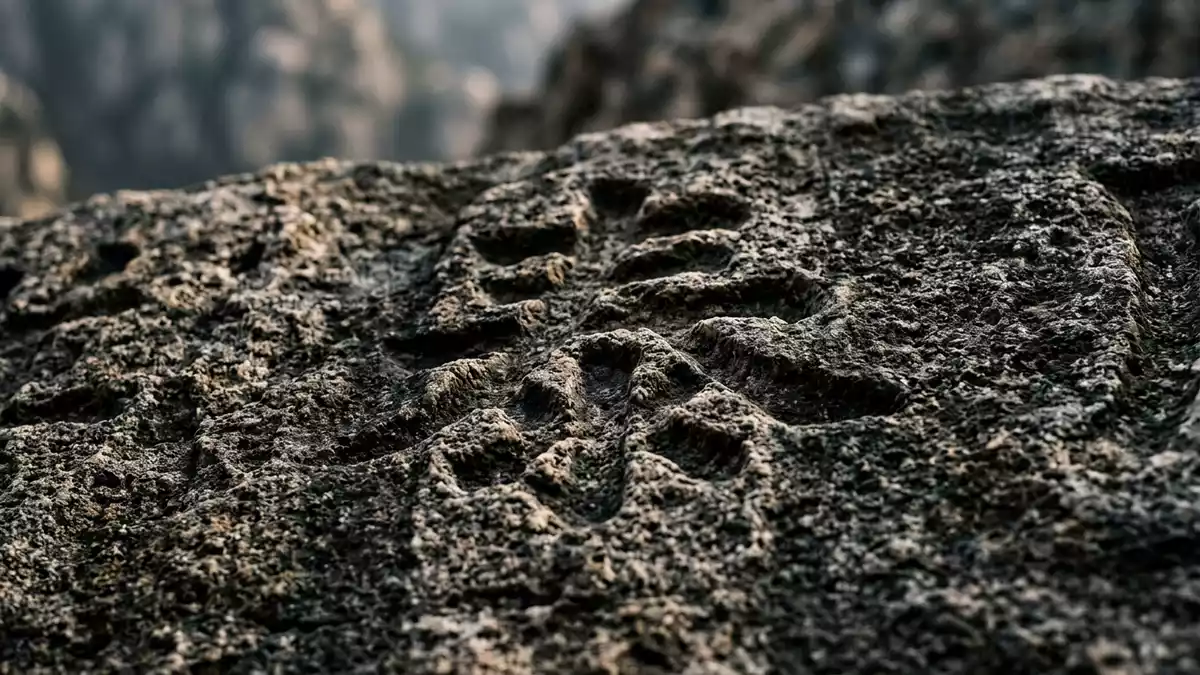
Tai Shan, known in English as Mount Tai, rises above the city of Tai'an in eastern China as a sacred mountain layered with stone paths, temples and engraved cliffs. Its main peak, Jade Emperor Peak, reaches about 1,545 m (5,069 ft), making it the highest point of Shandong province and a landmark that has anchored Chinese religious and cultural life since at least the Qin dynasty in the third century BC.
A mountain of emperors and inscriptions
Tai Shan stands immediately north of Tai'an in Shandong province, forming a compact massif whose crest line runs roughly south-west to north-east above the North China Plain.north of the city of Tai'an For more than 2,000 years it has been counted among the Five Sacred Mountains of China, specifically as the eastern mountain, associated in Chinese tradition with sunrise, renewal and the start of the cycle.one of the five holy mountains of China The formal status was underlined in 1987 when Mount Tai was inscribed on the UNESCO World Heritage List as a mixed cultural and natural site, recognising both its historic structures and its landscape.
Chinese rulers from the Qin dynasty onwards used Tai Shan as a stage for imperial sacrifices, travelling to the mountain to perform elaborate rites on the summit and along the slopes.imperial cult for nearly 2,000 years That history survives in a chain of temples, pavilions, stone gateways and stelae that line the main ascent, some founded in ancient times and rebuilt in later dynasties. The density of these structures, together with the hundreds of carved inscriptions on boulders and cliffs, gives the mountain the feel of an open-air archive of Chinese calligraphy, architecture and political history.
Climbing the sacred path from Tai'an
For visitors whose base is Tai'an, the most direct way to experience Tai Shan is to follow the traditional path that climbs from the city up to the summit plateau. The route threads from the foothills through a succession of stone stairways that cut across wooded gullies, past temples that mark stages of the ascent and gates that frame views back towards the plains.located just north of Tai'an City The combination of long staircases and built structures makes the climb as much a passage through architecture as a walk through mountain terrain.
Higher on the mountain, the path enters an area where the tree cover thins and the trail crosses bare rock, with stone balustrades giving onto steep drops and views that reach towards Jinan and the lowlands of Shandong.located in central Shandong Province Near the top, the steps lead into a cluster of buildings around Jade Emperor Peak, where courtyards, incense burners and shrines sit on terraces cut into the rock. From this upper zone the plateau of the summit and neighbouring secondary peaks form a broken skyline of granite slabs, temple roofs and flagpoles.
Temples, names and layered identities
Over its long history Tai Shan has carried several names, including Dongyue, the Eastern Peak, and Daizong, reflecting its role in Chinese cosmology as a cardinal mountain.Daizong in ancient time and Dongyue These names appear alongside temple plaques and stone inscriptions that record visits by emperors, scholars and monks. The principal temples include complexes near the base in Tai'an, which act as ceremonial gateways to the mountain, and others positioned on ledges and saddles higher up, each with its own courtyards, halls and drum towers.
Religious practices on Tai Shan historically drew from Daoism, Buddhism and folk beliefs, and that mix is visible in the variety of deities represented in the halls and the styles of the structures.regarded as the greatest of the Five Sacred Mountains Stone tablets bear classical Chinese inscriptions in a range of calligraphic styles, some cut directly into cliff faces beside the path, others mounted on pedestals in temple courts. Together with the stairways and gateways they create a continuous sequence of built elements that bind the religious landscape into the mountain’s topography.
Visiting Tai Shan: what travellers from Western Europe should know
- Tai Shan rises immediately north of Tai'an in Shandong province in eastern China, and can be reached from the urban area by road routes that lead into the foothills.
- The main ascent involves lengthy stone stairways that gain significant height, and parts of the route cross exposed rock with handrails beside steep drops.
- The mountain lies in eastern China, where the official language is Mandarin Chinese and the currency is the Chinese yuan (renminbi).
- Entry requirements depend on your nationality; UK travellers can check the FCDO travel advice at gov.uk/foreign-travel-advice, Irish travellers the Department of Foreign Affairs at ireland.ie.
Searching for Tai Shan on social platforms
These links open searches for Tai Shan on each platform.Frequently asked questions about Tai Shan
Where is Tai Shan?
Tai Shan stands just north of Tai'an in Shandong province in eastern China, forming a mountain massif above the North China Plain.
What should visitors expect on a visit?
Visitors encounter long stone stairways, a sequence of temples and gateways, and broad views over Shandong from the summit area around Jade Emperor Peak.
What makes Tai Shan distinctive?
Tai Shan combines a prominent summit with thousands of years of imperial ritual, dense temple architecture and carved inscriptions concentrated on a single mountain.


