
Tallinna vanalinn and the medieval city still shaped by walls
Published on 09/22/2026 at 23:42 | Editorial responsibility: Rafael Müller, Editor-in-Chief AD HOC NEWS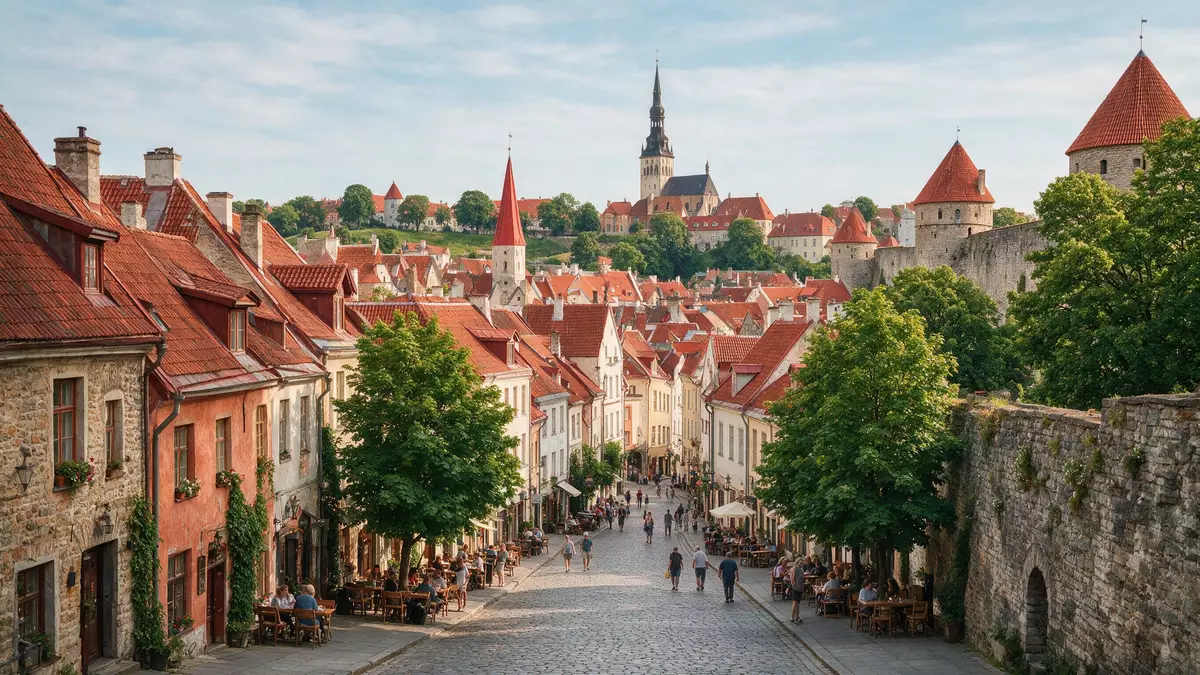
Tallinna vanalinn is a medieval urban quarter where streets, churches, merchant houses and fortifications remain closely connected. Tallinn developed as a Hanseatic trading centre from the thirteenth to the sixteenth century, and that period remains legible in the city plan.
Tallinna vanalinn: a city plan from the Hanseatic age
The Old Town occupies the historic centre of Tallinn beside the Baltic Sea. Its street network preserves the compact arrangement of lanes, squares and plots associated with a northern European trading city. The main square, Raekoja plats, forms the civic centre, while Pikk tänav links the upper town with the harbour side.
Merchants, craftsmen, clergy and civic officials occupied different buildings within this dense medieval setting. Stone town houses stand beside warehouses, churches and public buildings, creating a continuous architectural record rather than an isolated monument. The city was known as Reval during much of its historical development.
Walls, towers and the two levels of Tallinn
Fortifications define Tallinna vanalinn in both practical and visual terms. The surviving city wall and towers follow the perimeter of the historic settlement, while Toompea rises above the lower town as a separate urban layer. The contrast between the steep upper district and the commercial streets below is visible from several routes.
The wall dates from the thirteenth century, with later additions and alterations incorporated into the defensive circuit. Named structures include Viru Gate, Fat Margaret and Kiek in de Kök. The wall’s masonry, towers and gateways form part of the protected historic centre, rather than serving as a single freestanding monument. Tallinn’s heritage protection records the medieval street network, buildings and fortifications as parts of one archaeological and architectural area.
Gothic churches and merchant houses in Tallinn
Religious buildings provide some of the Old Town’s clearest vertical landmarks. St Nicholas’ Church, St Olaf’s Church and the Dome Church belong to different parts of Tallinn’s historical development, while their towers remain visible above the surrounding roofs. The buildings use masonry construction and contain architectural layers from several centuries.
St Olaf’s Church occupies the lower town, and the Dome Church stands on Toompea. Alexander Nevsky Cathedral adds a nineteenth-century Orthodox presence to the upper district, with richly decorated façades and domes distinct from the medieval Gothic buildings nearby. This mixture of periods reflects the continuing use of the historic quarter as a living part of Tallinn.
UNESCO inscribed the Historic Centre of Tallinn on the World Heritage List in 1997. The designation covers a medieval trading city whose street plan, buildings, archaeological layers and fortifications remain closely related. the Historic Centre of Tallinn is recorded as an exceptionally complete example of a medieval northern European trading city.
Visiting Tallinna vanalinn: what travellers from Western Europe should know
- Tallinna vanalinn lies in central Tallinn beside the Baltic harbour. Tallinn railway station and the passenger harbour are connected with the historic centre by the city’s streets and public transport.
- The quarter contains cobbled lanes, steep streets and stairways, especially around Toompea. Comfortable footwear matters on uneven stone surfaces.
- Raekoja plats, Pikk tänav, Viru Gate and Toompea are named reference points within the historic centre. The city wall appears at several points around the Old Town perimeter.
- The official language is Estonian and the currency is the euro.
Searching for Tallinna vanalinn on social platforms
These links open searches for Tallinna vanalinn on each platform.Frequently asked questions about Tallinna vanalinn
Where is Tallinna vanalinn?
Tallinna vanalinn occupies the historic centre of Tallinn in Estonia, beside the Baltic Sea and close to the city’s harbour.
What can visitors expect in the Old Town?
The quarter contains cobbled streets, medieval fortifications, churches, merchant houses, civic buildings and the elevated district of Toompea.
What makes Tallinna vanalinn distinctive?
Its thirteenth-century street network remains connected with surviving walls, towers and buildings from the Hanseatic period through the nineteenth century.


