
Taman Nasional Komodo and its volcanic islands
Published on 08/15/2026 at 14:59 | Editorial responsibility: Rafael Müller, Editor-in-Chief AD HOC NEWS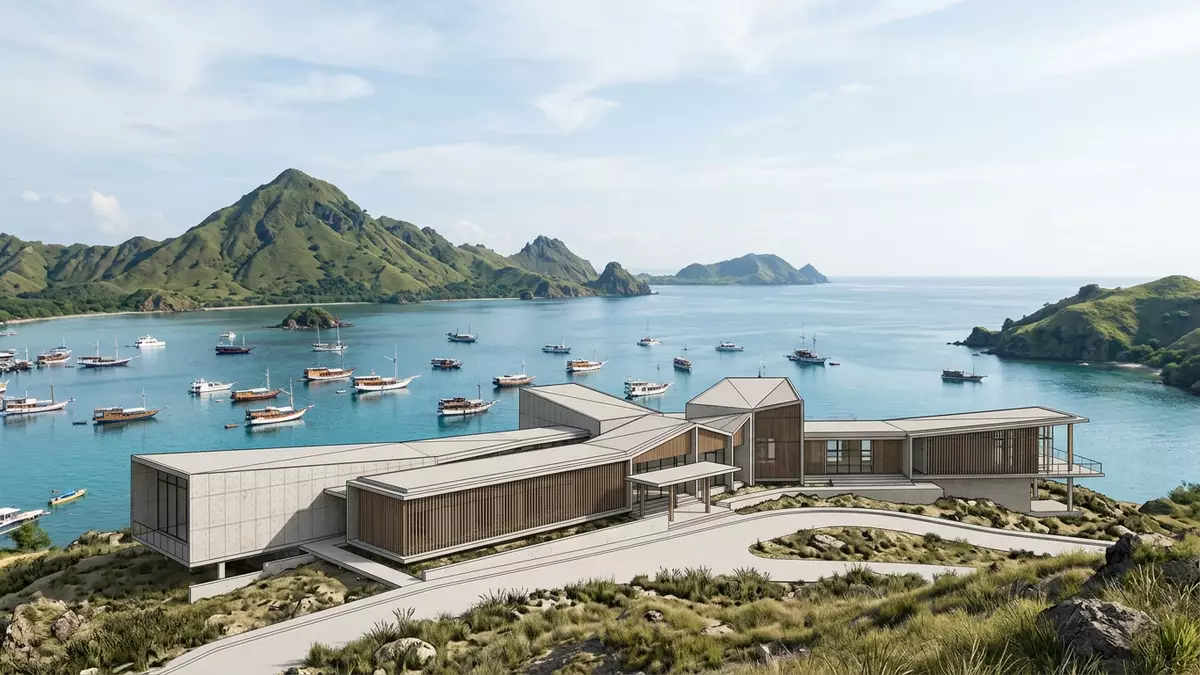
Taman Nasional Komodo near Labuan Bajo is a chain of volcanic islands between Sumbawa and Flores. Its mix of dry hills, coral water and large reptile habitat gives the park its strongest visual contrast.
Volcanic islands between Sumbawa and Flores
The park lies in Indonesia’s Lesser Sunda Islands and includes Komodo, Rinca and Padar, along with smaller islands. It is a UNESCO World Heritage site and a UNESCO Biosphere Reserve, with a formal inscription in 1991 and a biosphere designation in 1977.UNESCO World Heritagebiosphere designation
The islands are of volcanic origin, and the UNESCO listing describes a rugged landscape of dry savannah, thorny vegetation, white sandy beaches and blue coral waters. That contrast is the park’s most immediate feature on the page and in the field.
Komodo dragons and the dry island landscape
Komodo dragons are the park’s best-known inhabitants, and the UNESCO description gives a population of around 5,700 animals. Their scientific name is Varanus komodoensis, and the species is tied closely to these islands.around 5,700 animals
The same source places the park’s area at 219,322 ha and notes the junction between terrestrial and marine ecosystems. The result is not a single landscape type but a mix of coastal water, rocky slopes, savannah and coral-fringed shores.219,322 ha
Protection, status and the park’s longer story
Taman Nasional Komodo was established in 1980, and its protection history reaches back earlier in the twentieth century. The park is managed by Balai Taman Nasional Komodo under Indonesia’s environmental and forestry administration.established in 1980
The UNESCO record identifies the park as a conservation priority area for terrestrial and marine ecosystems. It also notes that the islands sit between Sumbawa and Flores, a location that helps define both the scenery and the wildlife.
Visiting Taman Nasional Komodo: what travellers from Western Europe should know
- Taman Nasional Komodo is reached through Labuan Bajo on Flores, with access to the islands by boat. The park sits between Sumbawa and Flores.
- The islands have rugged hillsides, dry ground and coastal paths. Footwear and a steady pace matter on uneven terrain.
- The park combines land and sea scenery in one setting. Coral water, savannah slopes and rocky islands appear in the same view.
- Komodo, Rinca and Padar are the main island names that structure most visits. They are joined by smaller islands and islets.
Searching for Taman Nasional Komodo on social platforms
These links open searches for Taman Nasional Komodo on each platform.
Frequently asked questions about Taman Nasional Komodo
Where is Taman Nasional Komodo?
It lies in Indonesia, between the islands of Sumbawa and Flores, and Labuan Bajo on Flores is the usual gateway. The park includes Komodo, Rinca and Padar.
What does a visit involve?
The setting combines islands, boats and rough ground, with coastal scenery and dry hillsides. The main experience is a landscape of land and sea rather than a single monument.
What makes Taman Nasional Komodo distinctive?
The park combines volcanic islands, coral waters and the Komodo dragon in one protected landscape. Its UNESCO status and biosphere designation add historical depth to that setting.


