
Theatro Epidavrou: a stone amphitheatre in a healing sanctuary
Published on 08/24/2026 at 21:46 | Editorial responsibility: Rafael Müller, Editor-in-Chief AD HOC NEWS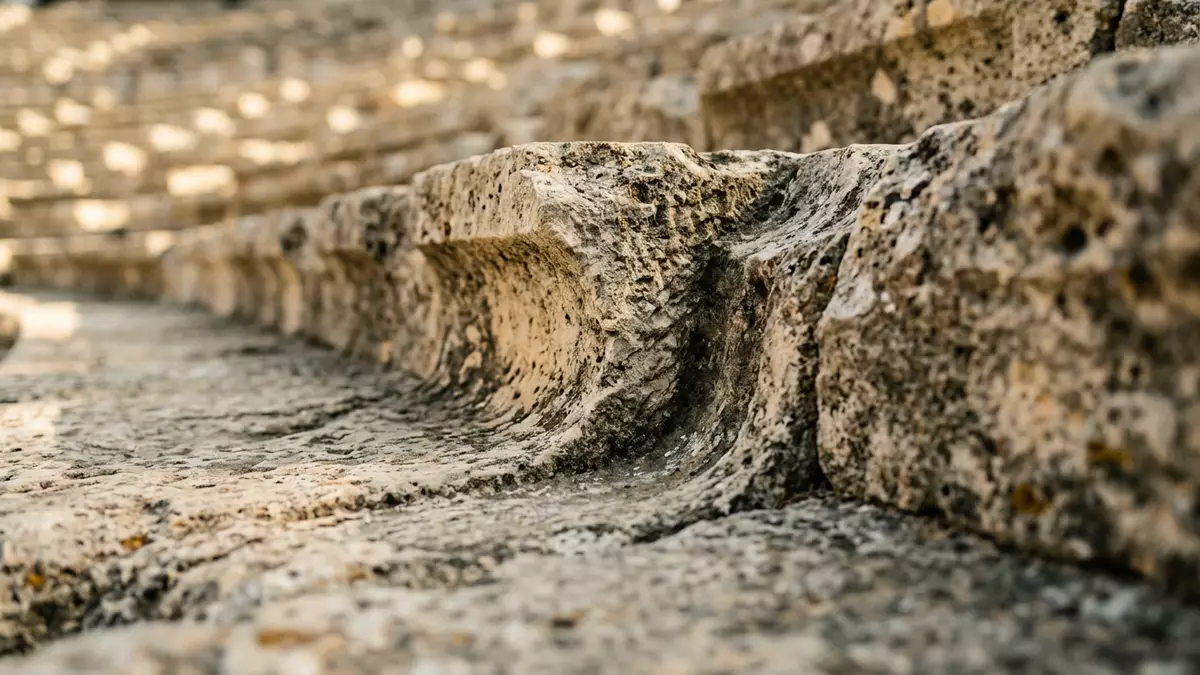
Theatro Epidavrou is the great ancient theatre at Epidauros in Greece, set into the slope of Mount Kynortion at the edge of the Sanctuary of Asklepios. Constructed in the late fourth century BC, it combines precise stone geometry with a wide view over the hills of Argolis and forms part of a UNESCO World Heritage site that links performance with an important centre of ancient medicine.
A theatre in the Sanctuary of Asklepios
Theatre and healing are closely connected at Theatro Epidavrou, because the theatre stands within the Sanctuary of Asklepios, the most prominent healing centre of the ancient Greek world.Sanctuary of Asklepios at Epidaurus The sanctuary developed around the cult of Asklepios, a god associated with medicine and recovery, and included temples, a circular tholos and accommodation buildings beside the theatre.Ancient Theatre of Epidaurus
Theatron, temple and surrounding landscape form a single setting: the theatre occupies the south-east end of the sanctuary, cut into the slope of Mount Kynortion and facing the surrounding hills of Argolis.Theatre of Epidaurus description Stone seating arcs around a central orchestra, while the ruins of medical facilities and religious buildings lie nearby, making it possible to walk between the place of performance and the remains of treatment rooms in a single visit.Epidaurus overview
Late classical design on a mountain slope
Theatro Epidavrou dates from the fourth century BC and belongs to the late classical phase of Greek architecture.Spätklassisches Bauwerk Ancient authors and modern research associate its design with Polykleitos the Younger, an architect from Argos whose name is tied to several works of that period.Polykleitos the Younger The theatre is cut into the natural slope of Mount Kynortion, using local stone to form a semi-circular cavea that grows in height towards the rear.
The seating is arranged in a strict geometric pattern, divided by staircases into wedge-shaped sectors that converge towards the orchestra and stage building.Stone seating pattern In its present form, the cavea consists of a lower and an upper section separated by a horizontal walkway, reaching a capacity in the range of 13,000 to 14,000 spectators once the upper part was added in the Hellenistic period.Seating capacity and layout Limestone benches form continuous rings of seating, and the overall form illustrates the tripartite structure typical of Greek theatres: cavea, orchestra and stage building.Three-part theatre form
Acoustics, aesthetics and world heritage
Theatro Epidavrou is widely known for the precision of its proportions and the clarity of its acoustics, which have drawn comment since antiquity.Acoustics and aesthetics The alignment of the cavea, the curvature of the seating and the stone construction contribute to a space where voices from the stage can be heard across the auditorium, and the theatre’s symmetry has long been cited as a model of Greek design.Masterpiece of Greek architecture
In 1988 the Sanctuary of Asklepios at Epidaurus, including Theatro Epidavrou, was inscribed on the UNESCO World Heritage List for its architectural quality and its significance in the history of medicine.UNESCO inscription year The theatre continues to function as a performance venue during cultural festivals, so drama is still staged in the same stone structure that served audiences in the classical era, linking ancient theatrical practice with contemporary interpretations of Greek tragedy.World Heritage travel guide
Visiting Theatro Epidavrou: what travellers from Western Europe should know
- Theatro Epidavrou lies within the archaeological site of the Sanctuary of Asklepios near Lygourio in the Argolis region of the Peloponnese, south of Nafplio, and is reached by road from Athens and other Peloponnese towns.
- The theatre is built into a hillside, and reaching the upper seating involves climbing long flights of stone steps that rise high above the orchestra.
- The surrounding area includes further remains of the sanctuary, such as temple foundations and the tholos, so walking between different parts of the site involves uneven ground and gravel paths.
- The official language is Greek and the currency is the euro.
Searching for Theatro Epidavrou on social platforms
These links open searches for Theatro Epidavrou on each platform.
Frequently asked questions about Theatro Epidavrou
Where is Theatro Epidavrou located?
Theatro Epidavrou stands within the Sanctuary of Asklepios near Lygourio in the Argolis region of the Peloponnese in Greece, in the wider municipality of Epidauros.
What should visitors expect during a visit?
Visitors encounter a large stone theatre cut into a hillside, extensive seating rising above a central orchestra, and nearby ruins of temples and healing buildings within the sanctuary.
What makes Theatro Epidavrou distinctive among ancient theatres?
Theatro Epidavrou is noted for its late classical design by Polykleitos the Younger, its well-preserved stone seating, its clear acoustics and its inclusion in a UNESCO World Heritage healing sanctuary.


