Tiwanaku and the stone platforms of the high plain
Published on 08/07/2026 at 15:05 | Editorial responsibility: Rafael Müller, Editor-in-Chief AD HOC NEWS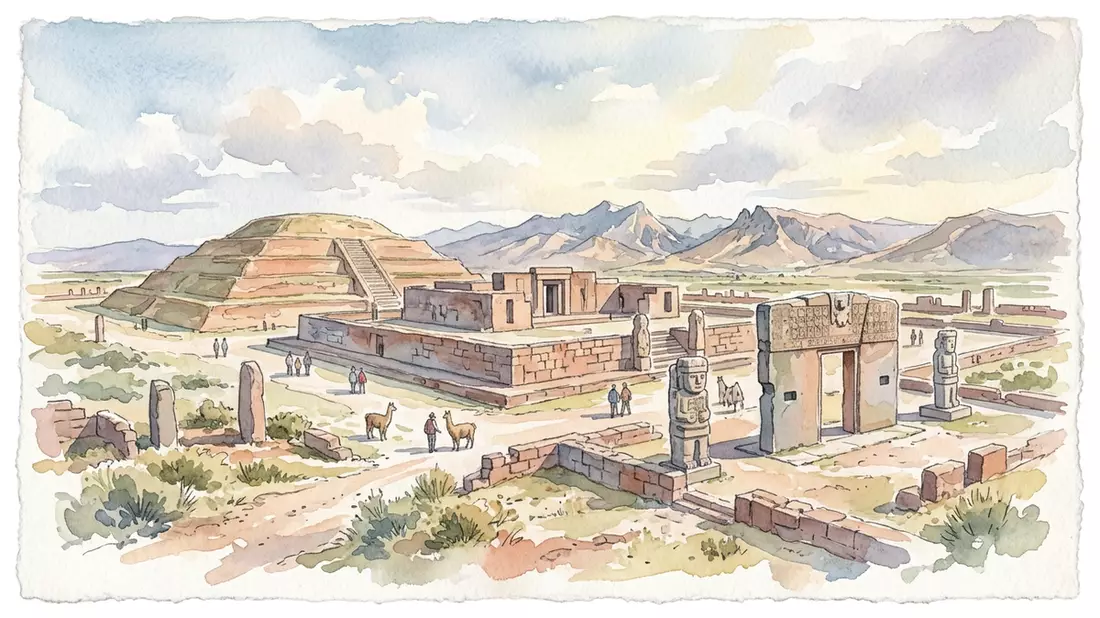
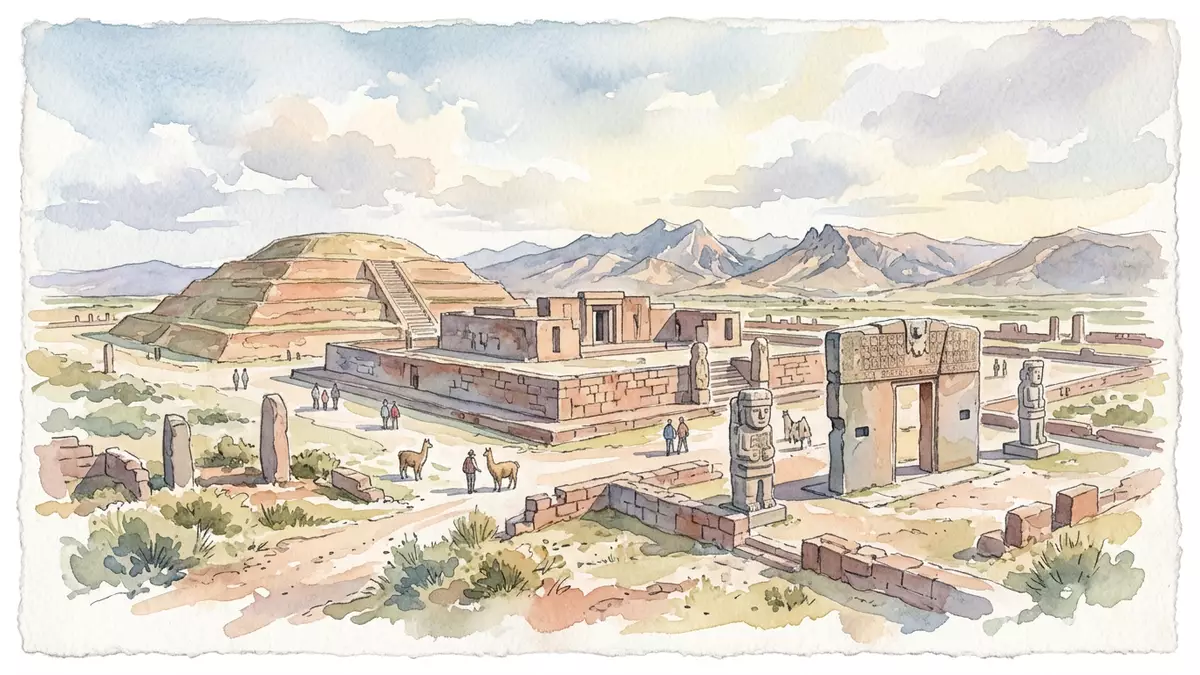
Tiwanaku in Bolivia is an archaeological site of carved stone, raised platforms and monoliths on the Altiplano. It is closely associated with the Tiwanaku culture, which flourished in the centuries before and around the first millennium AD.
Stone platforms on the Altiplano
The site’s main impression comes from its masonry: dressed blocks, ashlar walls and broad terraces set against an open highland landscape. Kalasasaya and the semi-subterranean temple belong to the best-known remains, both built from stone and laid out with a formal clarity that is easy to read on foot.
Several large carved monoliths stand among the ruins, including the Bennett Monolith, a tall anthropomorphic figure in stone. Nearby, the Gateway of the Sun presents a single carved lintel with relief figures and a central image that has become one of the site’s defining pieces.
An Andean centre of power
Tiwanaku is tied to an influential pre-Columbian civilisation that extended its reach across parts of the southern Andes. The architectural remains, monumental sculpture and spread of distinctive stonework show a place that was more than a local settlement.
The main structures belong to the period between the late first millennium BC and the early second millennium AD. That long span leaves the site with layers of rebuilding and reuse, but the surviving forms still convey a planned ceremonial centre rather than a scattered ruin field.
Carving, relief and monumentality
What survives at Tiwanaku is not only size but finish. Relief carving appears on gateways and monoliths, while fitted blocks and straight courses give the architecture a measured appearance uncommon in many ancient stone sites.
That combination of massive scale and precise carving is part of the site’s appeal. The stones are not decorative fragments set apart from the architecture; they are the architecture, and they make the place legible as both a ritual landscape and a crafted monument.
Visiting Tiwanaku: what travellers from Western Europe should know
- Tiwanaku lies in the Bolivian highlands west of La Paz and is reached by road from the city.
- Admission arrangements and opening hours are set by the site's operator and change with the season; the official website is the only binding source.
- The site is best visited in clear weather, when the stone details and open layouts are easier to read.
- The ground is open and exposed, with uneven surfaces and altitude that may affect some visitors.
- Spanish is the main language used on site, and carrying small notes in local currency is practical for minor purchases.
- Entry requirements depend on your nationality. UK travellers should check the FCDO travel advice at gov.uk/foreign-travel-advice; Irish travellers the Department of Foreign Affairs at ireland.ie; EU and EEA citizens their own national foreign ministry.
Searching for Tiwanaku on social platforms
These links open searches for Tiwanaku on each platform.
Frequently asked questions about Tiwanaku
Where is Tiwanaku?
It is an archaeological site in Bolivia’s Altiplano, west of La Paz. The setting is high and open, with the ruins spread across a broad plain.
What should visitors expect?
Expect stone platforms, carved monuments and exposed walking across an archaeological landscape. The visit is more about looking closely at architecture and sculpture than about enclosed interiors.
What makes Tiwanaku distinctive?
Its carved monoliths, formal stone masonry and monumental gateways create a strong architectural character. The site is one of the central places associated with the Tiwanaku civilisation.