
Todai-ji and the Great Buddha Hall of Nara
Published on 09/07/2026 at 13:41 | Editorial responsibility: Rafael Müller, Editor-in-Chief AD HOC NEWS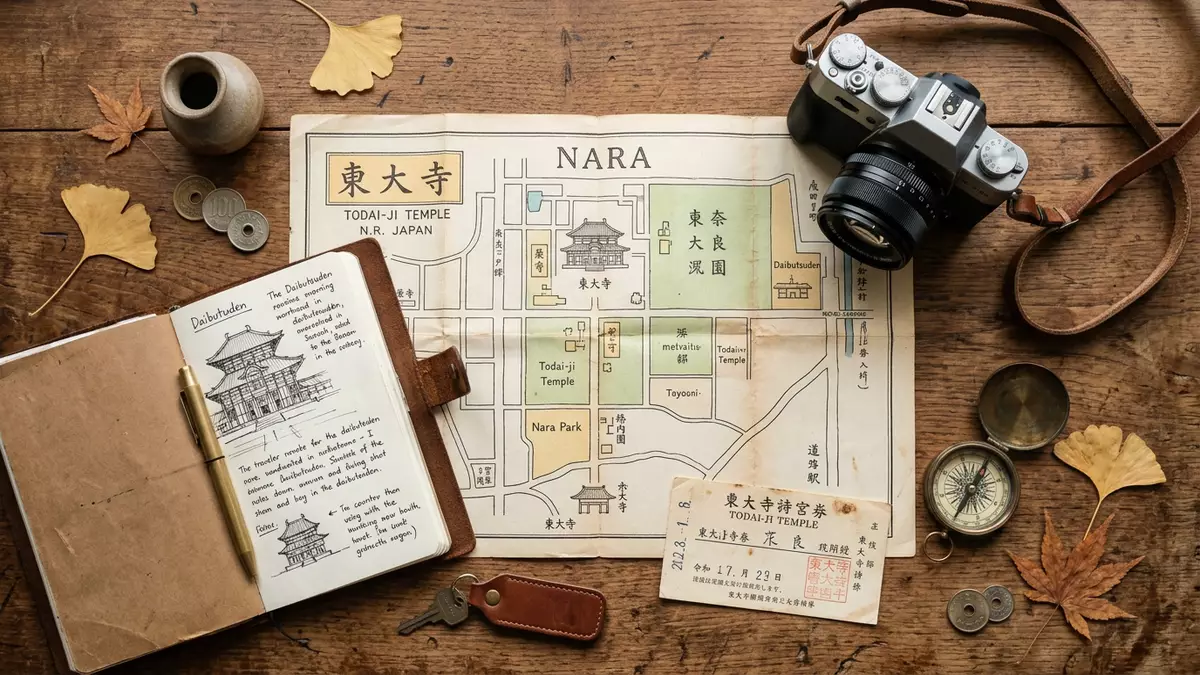
Todai-ji in Nara is a vast Buddhist temple complex where a monumental bronze Buddha sits within a towering wooden hall that dominates the parkland around it. Founded in the eighth century during the Nara period, the temple became a central institution of the Kegon school of Buddhism under Emperor Shomu and still anchors the historic core of the city.
A temple built on an imperial scale
Todai-ji, literally the “Eastern Great Temple”, was established as a major Buddhist centre in Nara when the city served as the imperial capital of Japan in the eighth century.major Buddhist centre Emperor Shomu ordered its construction as the principal temple of the Kegon sect, aligning religious authority with the political power concentrated in Nara.Kegon school in Nara City
The temple complex occupies a northern section of Nara City, extending into what is now known as Nara Park, with gates, halls and subsidiary buildings arranged along axial approaches towards the Great Buddha Hall.Todaiji is located in the northern part of Nara Park Within this ensemble, Todai-ji serves both as a functioning place of worship and as a historical site that preserves the layout of an early Japanese temple compound on an imperial scale.
The Great Buddha Hall and its bronze statue
The Great Buddha Hall, or Daibutsu-den, is Todai-ji’s main hall and one of the most recognisable structures in Nara. The current building dates from the Edo period, after earlier versions were lost to fire; it was rebuilt under the direction of the monk Kokei, following the plan of the larger original hall but with a reduced number of bays.present structure dating to the Edo period Even in this slightly smaller form, its timber frame rises to about 48.7 m (159.7 ft), with a width of roughly 57 m (187 ft) and a depth around 50 m (164 ft), making it one of the largest wooden buildings ever constructed.largest wooden building dimensions
Inside the hall sits the Great Buddha, a seated Vairocana Buddha cast in bronze and traditionally dated to the year 752.bronze Buddha dated to 752 The statue itself stands about 15 m (49 ft) high, with the overall composition, including its base, reaching roughly 18 m (59 ft).statue height and weight Visitors entering the hall encounter a vast interior volume framed by heavy timber columns, with the seated Buddha flanked by smaller attendant figures and other ritual objects that emphasise the scale of the central image.
Todai-ji within historic Nara
Todai-ji forms part of the ensemble known as the Historic Monuments of Ancient Nara, inscribed on the UNESCO World Heritage List in 1998.Historic Monuments of Ancient Nara Alongside other temples and shrines, it represents the period when Nara was the capital and a focal point for the transmission of Buddhist culture from the Asian mainland into the Japanese archipelago. Within the Todai-ji precinct, additional halls such as Hokke-do (Sangatsu-do) and Kaidan-do house important sculptures and ritual spaces, extending the range of architectural forms beyond the Great Buddha Hall.Hokke-d? and Kaidan-d?
The temple complex sits amid the open lawns and woodland of Nara Park, where paths lead from the main streets of Nara towards the great gate and onwards to the inner compound.located within Nara Park The relationship between the dense timber structures and the surrounding greenery is central to the experience of the site, with views framed by gates, corridors and rooflines that link the temple visually to the wider landscape of historical Nara.
Visiting Todai-ji: what travellers from Western Europe should know
- Todai-ji stands in the northern part of Nara Park, reached on foot or by local bus from JR Nara Station and Kintetsu Nara Station.
- The approach to the Great Buddha Hall includes broad outdoor paths and stairways, and the interior route around the statue involves walking on hard floors within a vast enclosed space.
- The official language is Japanese and the currency is the yen.
- Entry requirements depend on your nationality; UK travellers can check the FCDO travel advice at gov.uk/foreign-travel-advice, Irish travellers the Department of Foreign Affairs at ireland.ie.
Searching for Todai-ji on social platforms
These links open searches for Todai-ji on each platform.Frequently asked questions about Todai-ji
Where is Todai-ji located?
Todai-ji is in Nara City in Japan, occupying a northern section of Nara Park that is accessible from both JR Nara Station and Kintetsu Nara Station.
What should visitors expect on a visit to Todai-ji?
Visitors can walk through the temple grounds to the Great Buddha Hall, enter a vast timber interior and view the huge seated bronze Buddha along with attendant sculptures and architectural details.
What makes Todai-ji distinctive among temples in Nara?
Todai-ji is distinctive for its combination of an eighth-century foundation, an Edo-period Great Buddha Hall of extraordinary wooden scale and a monumental bronze Buddha recognised as part of a UNESCO-listed ensemble.


