
Tongariro National Park and its volcanic plateau
Published on 08/21/2026 at 22:03 | Editorial responsibility: Rafael Müller, Editor-in-Chief AD HOC NEWS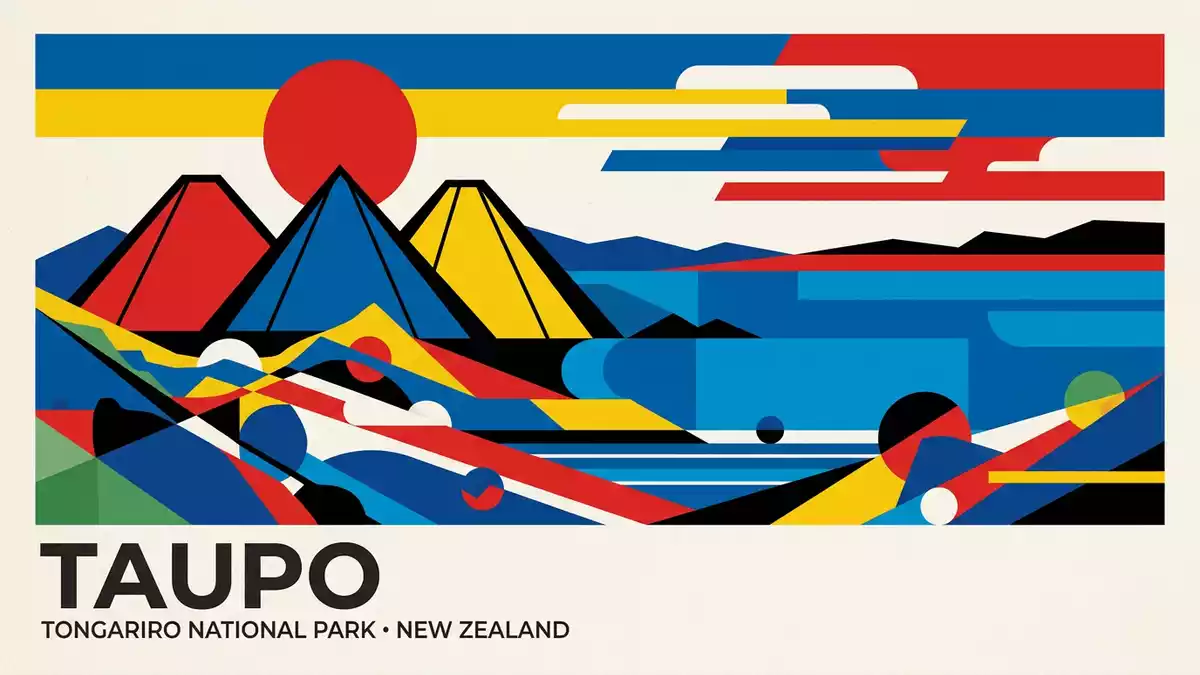
Tongariro National Park rises on New Zealand’s North Island as a landscape of volcanic cones, open high country and deep cultural meaning. It is centred on Tongariro, Ngauruhoe and Ruapehu, and its World Heritage status reflects both natural and cultural values.World Heritage status
Volcanoes at the centre of the park
The park is shaped by three active volcanoes: Tongariro, Ngauruhoe and Ruapehu.three active volcanoes Their dark slopes, broad ridges and scattered alpine ground give the park a stark profile that changes from distance to distance.
Ruapehu is the highest of the three, and the mountain names carry deep M?ori associations. The park’s landscape combines volcanic landforms with areas of native vegetation and open upland terrain.
A protected landscape with layered meaning
Tongariro National Park became a World Heritage property in 1993 under cultural landscape criteria, after an earlier natural inscription in 1990. That dual recognition links the park’s physical form with its cultural and spiritual associations.dual World Heritage status
It was the first property to be inscribed on the World Heritage List under the revised cultural landscape criteria.revised cultural landscape criteria The result is a park that is read as both scenery and sacred landscape, with volcanoes at the centre of that identity.
Tongariro National Park and Taupo
The park lies near Taupo on the North Island, within a high volcanic region that links it to the wider central plateau. Its setting places it among lakes, lava fields and mountain country.
From Taupo, the park forms part of a wider circuit of volcanic landscapes, with the mountains visible across large stretches of open terrain. The scene is dominated by summit forms rather than dense forest.
Visiting Tongariro National Park: what travellers from Western Europe should know
- The park lies on New Zealand’s North Island near Taupo. Road access runs through the central plateau, and the main approaches follow the volcanic district.
- The terrain is alpine in character, with exposed slopes, high passes and volcanic ground. The mountains reach above the surrounding uplands, so weather and altitude shape the experience.
- The park’s cultural identity is closely tied to M?ori heritage and to the mountains themselves. That connection remains visible in the place names and in the World Heritage designation.
- Ruapehu, Tongariro and Ngauruhoe form the strongest visual markers of the park. Their cones and ridgelines dominate the horizon from multiple angles.
Searching for Tongariro National Park on social platforms
These links open searches for Tongariro National Park on each platform.
Frequently asked questions about Tongariro National Park
Where is Tongariro National Park?
The park lies on New Zealand’s North Island near Taupo. It sits in the central volcanic uplands between major mountain and lake country.
What can be expected from a visit?
The park presents volcanic summits, open alpine ground and broad views across a high plateau. Its landscape is large in scale and strongly shaped by the mountains at its centre.
What makes Tongariro National Park distinctive?
Its distinction lies in the combination of active volcanoes, World Heritage recognition and M?ori cultural significance. The landscape is both geological and spiritual in character.


