
Uxmal and the layered stone language of Puuc architecture
Published on 09/24/2026 at 02:17 | Editorial responsibility: Rafael Müller, Editor-in-Chief AD HOC NEWS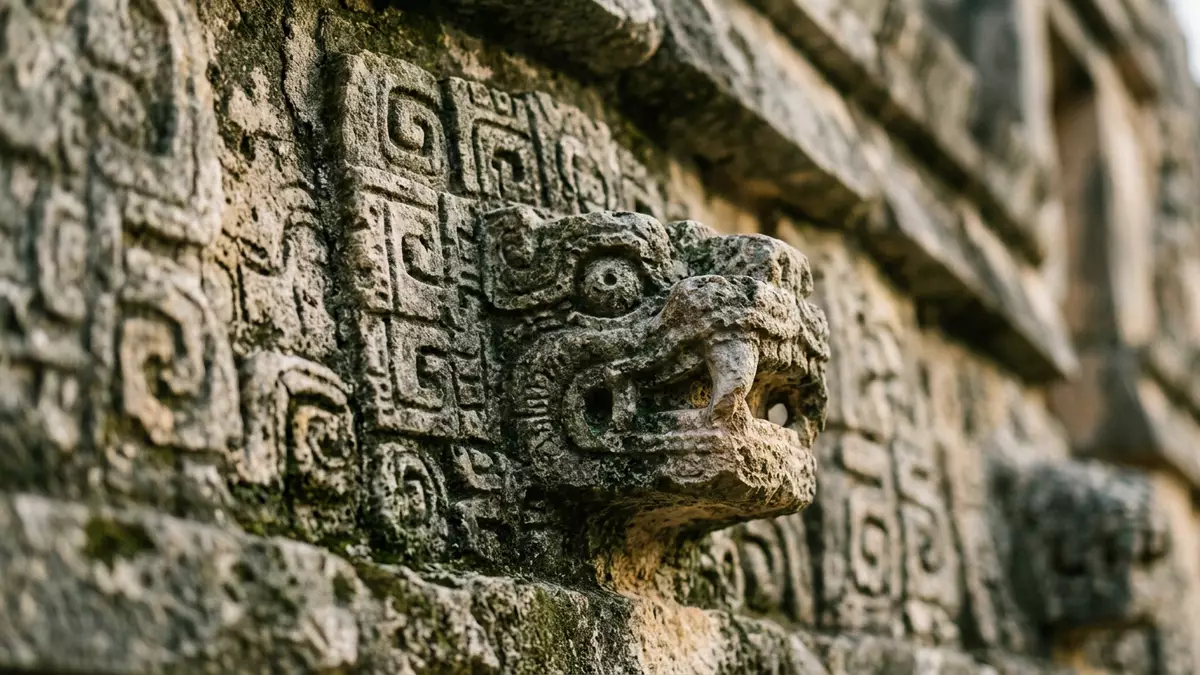
Uxmal rises from the low hills of western Yucatán as a Maya city shaped by stone, geometry and ceremonial space. Its buildings belong to the Puuc architectural tradition, whose limestone façades combine smooth surfaces, horizontal bands and sculpted rain-god masks.
The site is not a single monument but an urban and ceremonial complex. The Pyramid of the Magician, the Nunnery Quadrangle and the Governor’s Palace form distinct architectural compositions across the settlement.
Uxmal in the Puuc hills
Uxmal lies in the Puuc region of the Yucatán Peninsula, in Mexico, south of Mérida and near the settlements of Santa Elena and Muna. Puuc means “hilly country” in Maya, a name associated with the low limestone hills and the architectural tradition linked to them.
The city flourished during the Late Classic period, from the seventh to the tenth centuries. Its principal structures were built between AD 700 and 1000, while Maya historical traditions place the foundation of Uxmal in the later tenth century. Uxmal’s Late Classic history therefore combines archaeological dating with written Maya traditions.
Uxmal formed the urban centre of a wider network that included Kabah, Labná and Sayil. Together, these settlements show the scale of political, economic and ceremonial life in the southern Yucatán during the Late Classic period.
Stone façades, masks and monumental courts
The Puuc style is especially clear in the upper sections of Uxmal’s buildings. Carefully cut limestone blocks create mosaics, lattice patterns and repeated bands, while sculpted masks represent Chaac, the Maya rain deity.
The Nunnery Quadrangle encloses a large court with buildings on four sides. Their façades carry dense decoration, including geometric stonework and mask imagery. The name comes from a Spanish comparison, not from evidence that the complex served as a convent.
The Governor’s Palace extends across a long platform above the surrounding courts. Its façade is organised through repeated horizontal lines, geometric patterns and stone masks. The arrangement gives the building a strong visual rhythm without reducing it to a single repeated motif.
At the centre of the complex, the Pyramid of the Magician rises above the plazas. Its profile differs from the more regular stepped pyramids found at many other Maya sites, and its rounded sides form a distinctive silhouette. Puuc architectural features include limestone construction, stucco surfaces, Chaac masks and strong horizontal ornament.
A Maya city remembered through its architecture
Uxmal was one of the principal centres of the Puuc region. Its ceremonial buildings, raised platforms and broad courts express a society with organised labour, specialised craft production and formal public spaces.
The city’s buildings also preserve different treatments of surface and mass. Some walls appear comparatively plain below, while upper façades carry elaborate mosaics. This contrast places decoration high across the architecture and makes the stonework legible from the open courts.
Uxmal entered the UNESCO World Heritage List in 1996 as the Pre-Hispanic Town of Uxmal. The designation includes the cultural importance of the ceremonial structures and their relationship to the nearby Puuc settlements. World Heritage designation identifies the complex as a major expression of late Maya art and architecture.
The site’s surviving form is therefore both architectural and historical. Platforms, stairways, courts and decorated façades preserve the outline of a city whose influence reached beyond its principal ceremonial buildings.
Visiting Uxmal: what travellers from Western Europe should know
- Uxmal is in western Yucatán, near Santa Elena and south of Mérida. Federal Highway 261 leads to the archaeological zone, and the site lies along the Ruta Puuc.
- The complex covers open ground between monumental platforms, courts and stairways. Limestone surfaces and changes in level are permanent features of the archaeological landscape.
- Uxmal forms part of a wider Puuc circuit that includes Kabah, Labná and Sayil. Each settlement preserves a different group of Maya buildings and decorated façades.
- The official language is Spanish and the currency is the Mexican peso.
- Entry requirements depend on your nationality; UK travellers can check the FCDO travel advice at gov.uk/foreign-travel-advice, Irish travellers the Department of Foreign Affairs at ireland.ie.
Searching for Uxmal on social platforms
These links open searches for Uxmal on each platform.Frequently asked questions about Uxmal
Where is Uxmal located?
Uxmal is in the Puuc region of western Yucatán, Mexico, near Santa Elena and south of Mérida. It belongs to a network of Maya settlements that includes Kabah, Labná and Sayil.
What can visitors expect at Uxmal?
Visitors encounter monumental courts, raised platforms, stairways and decorated limestone buildings. The principal structures include the Pyramid of the Magician, the Nunnery Quadrangle and the Governor’s Palace.
What makes Uxmal distinctive?
Its distinctive character comes from the Puuc treatment of limestone façades. Horizontal bands, geometric mosaics and repeated Chaac masks cover important upper sections of the architecture.


