Wadi Al-Hitan: whale fossils in Egypt’s Western Desert
Published on 09/05/2026 at 10:08 | Editorial responsibility: Rafael Müller, Editor-in-Chief AD HOC NEWS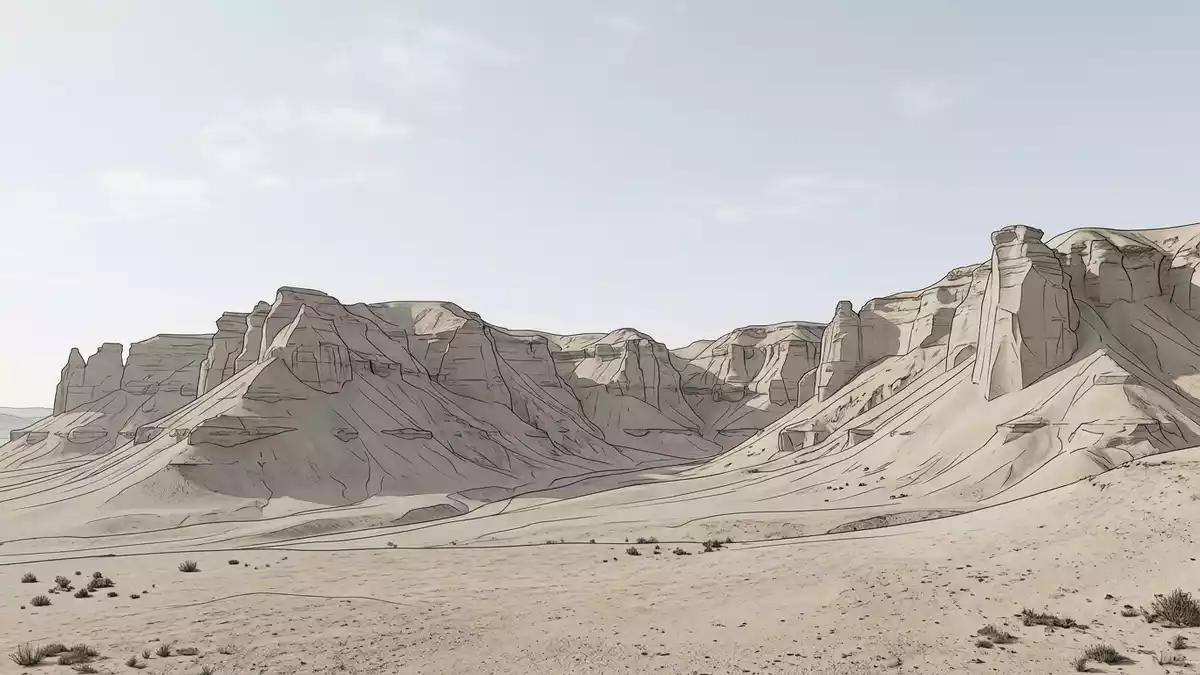
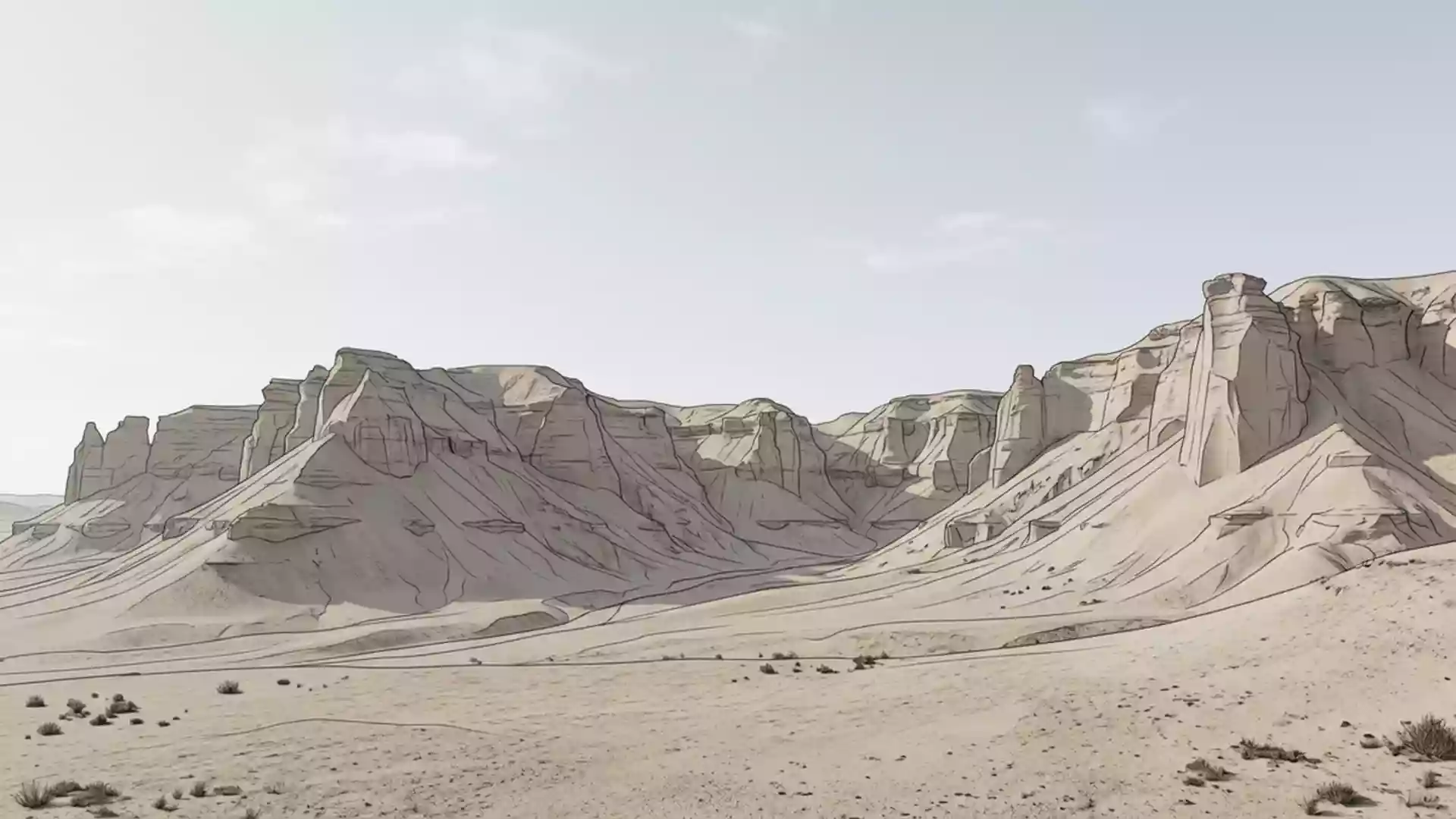
Wadi Al-Hitan in the Fayyum region of Egypt is a desert valley where ancient whale skeletons lie exposed in the sand, preserving a vivid record of life in an Eocene sea. Recognised as a UNESCO World Heritage Site in 2005, it links the Western Desert landscape with the story of how early whales adapted from land to ocean. The site lies within the Wadi El-Rayan Protected Area and forms part of a wider geological depression shaped during the Eocene period.
A desert valley shaped by an ancient sea
Wadi Al-Hitan sits in Egypt’s Western Desert, west of Fayyum and south-west of Cairo, within the broader Fayyum depression that carries rocks from the middle to late Eocene.Western Desert location The valley forms part of the Wadi El-Rayan Protected Area, a landscape where desert plains are broken by low cliffs, buttes and rock formations carved by wind and water.Wadi El-Rayan Protected Area Here, layers of sandstone, clay and limestone record the retreat of the ancient Tethys Ocean and the emergence of land at the edge of that sea.
The rocks visible around Wadi Al-Hitan belong to three principal Eocene formations, including the Gehannam and Birket Qarun formations which date to roughly 40–41 million years ago.Eocene formations at Wadi Al-Hitan These formations preserve thick sedimentary successions of marl, gypsum-rich clay, sandstone and harder limestone, laid down in shallow marine settings, lagoons and coastal environments. Standing on the valley floor, the surrounding escarpments show horizontal bands of differing colour and texture, each marking a change in environment as the shoreline shifted.
Valley of the Whales: fossils in the sand
The name Wadi Al-Hitan, “Valley of the Whales”, reflects its extraordinary concentration of fossil skeletons from early whales of the Archaeoceti suborder.early whale fossils Species such as Basilosaurus isis and Dorudon atrox are particularly abundant, with articulated skeletons showing elongated bodies, powerful tails and small hind limbs.Basilosaurus isis and Dorudon atrox Many skeletons lie in situ along gentle slopes and sandy flats, giving a clear sense of how these animals settled into the sea floor.
Alongside the whale remains, the valley preserves fossils of other marine life: sirenians such as early sea cows, crocodiles, turtles, bony fish and a variety of sharks and rays.sirenians and other fossils This assemblage underlines the richness of the Eocene ecosystem that once occupied what is now the Western Desert. The density and preservation of the fossils, visible along marked routes in the sand, have led to Wadi Al-Hitan being described as an open-air museum of marine vertebrate evolution.
World Heritage status and scientific significance
In July 2005, Wadi Al-Hitan was inscribed on the UNESCO World Heritage List for its outstanding geological and palaeontological value, under natural criterion viii.UNESCO inscription in 2005 The listing emphasises that this is one of the most important sites globally for demonstrating the evolution of whales from land-dwelling mammals to fully marine animals.evolutionary significance The combination of numerous complete skeletons, clear stratigraphic context and accessible exposure makes the valley particularly valuable for researchers.
Scientific work at Wadi Al-Hitan has documented not only cetaceans but also sirenians, reptiles and fish, building a detailed picture of Eocene coastal environments along the margin of the Tethys Ocean.Eocene coastal setting The site’s protection within Wadi El-Rayan and its recognition by international bodies have helped preserve both the fossils and the surrounding desert landforms for ongoing study.
Visiting Wadi Al-Hitan: what travellers from Western Europe should know
- Wadi Al-Hitan lies west of Fayyum in Egypt’s Western Desert, within the Wadi El-Rayan Protected Area; access is by road from the Nile Valley and Fayyum region.
- The valley is a dry desert landscape with sandy tracks and low rock ridges, so walking involves uneven ground and exposure to sun with little natural shade.
- The official language is Arabic and the currency is the Egyptian pound.
- Entry requirements depend on your nationality; UK travellers can check the FCDO travel advice at gov.uk/foreign-travel-advice, Irish travellers the Department of Foreign Affairs at ireland.ie.
Searching for Wadi Al-Hitan on social platforms
These links open searches for Wadi Al-Hitan on each platform.Frequently asked questions about Wadi Al-Hitan
Where is Wadi Al-Hitan located?
Wadi Al-Hitan is in Egypt’s Western Desert, west of Fayyum and about 150 km south-west of Cairo, within the Wadi El-Rayan Protected Area.
What can visitors expect to see on a visit?
Visitors encounter exposed fossil skeletons of early whales and other marine animals set in a dry desert valley, along marked routes across sandy ground.
What makes Wadi Al-Hitan distinctive?
Wadi Al-Hitan stands out for its concentration of Eocene whale skeletons preserved in their original geological setting, recognised through UNESCO World Heritage status since 2005.