
Waitomo Glowworm Caves and the starry darkness of Waitomo
Published on 09/08/2026 at 06:21 | Editorial responsibility: Rafael Müller, Editor-in-Chief AD HOC NEWS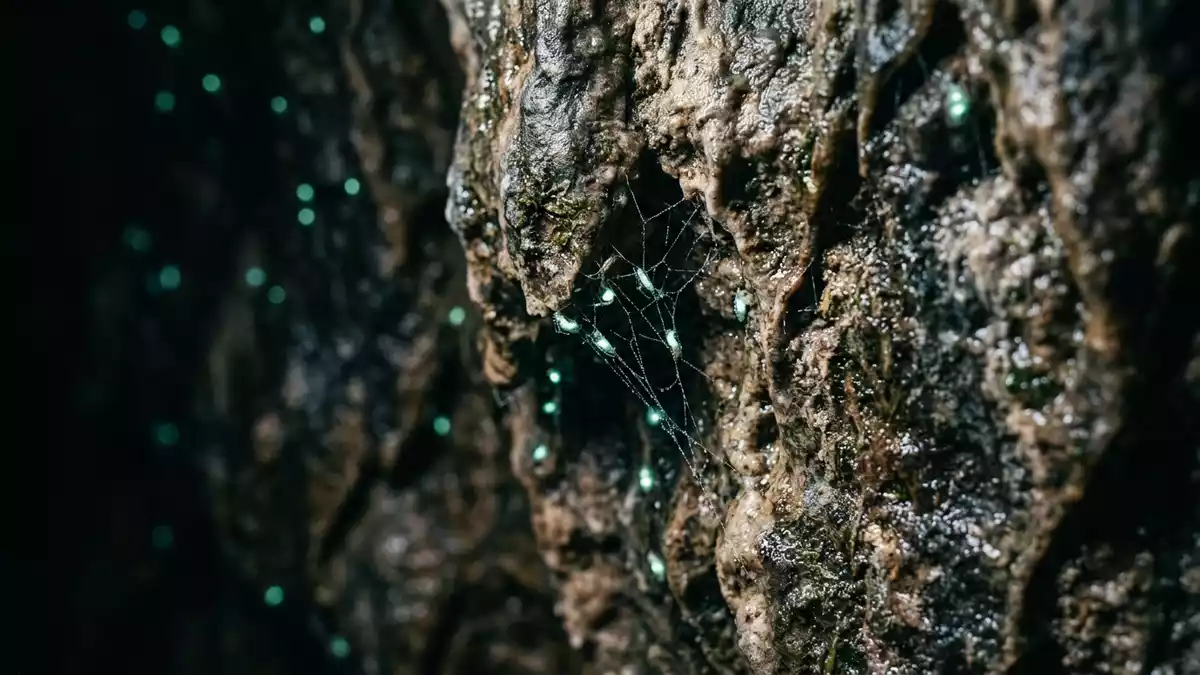
Waitomo Glowworm Caves near the village of Waitomo in New Zealand’s North Island bring together ancient limestone, an underground river and the pale blue-green light of glowworms in a single enclosed landscape. The cave forms part of a wider karst system cut into Oligocene limestone that began forming around 30 million years ago beneath a shallow sea.
Limestone, river and chambers beneath Waikato
The Waitomo Glowworm Cave lies in the northern King Country region of the North Island, close to the boundary of Waikato and reached from the small settlement of Waitomo Caves along a short access road.northern King Country region It is part of the Waitomo streamway system, a chain of caves and underground passages that follow the course of the Waitomo River and connect with systems such as Ruakuri Cave, Lucky Strike and Tumutumu Cave.Waitomo streamway system
The rock that carries these caves is limestone laid down during the Oligocene Epoch, when calcium carbonate from marine organisms accumulated on the seafloor and was compacted into a solid bed.limestone laid down during the Oligocene Groundwater later absorbed carbon dioxide, became slightly acidic and began dissolving the limestone along fractures, gradually widening small openings into passages and chambers that geologists classify as Quaternary in age.passages and chambers classified as Quaternary Within the Waitomo Glowworm Cave these passages extend for about 1,300 m (4,300 ft) on two levels, with the lower level following the bed of the Waitomo River and an upper level standing dry above it.about 1,300 m of interconnected passages
Glowworms and bioluminescence on the cave ceiling
The feature that gives Waitomo Glowworm Caves their character is the population of Arachnocampa luminosa, a small fungus gnat species whose larvae emit light and form dense clusters on the damp roofs of the chambers above the river.Arachnocampa luminosa Arachnocampa luminosa is endemic to New Zealand and is found in the wild only within this country, where larvae inhabit grottos, sheltered banks and cave ceilings in regions such as Waikato.endemic to New Zealand
In Waitomo Glowworm Caves the larvae produce blue-green light through bioluminescence, using a specialised enzyme called luciferase that drives a chemical reaction in the body and creates a steady glow along their bodies and the fine strands they hang into the air.blue-green light through bioluminescence When seen from a boat or path along the river, the effect transforms the cave ceiling into a field of points of light that resemble a night sky suspended above limestone formations and dark water, with the glow reflecting in the stream below.
Cultural history and the experience of the cave
Waitomo Glowworm Caves have been a tourist attraction for over 130 years, forming one of three caves that visitors commonly explore in the Waitomo region alongside Ruakuri Cave and Aranui Cave.tourist attraction for over 130 years The cave is officially known as Waitomo Cave and consists of several large chambers linked by passages, including a tall space known as the Cathedral where the limestone rises to its greatest height above the floor.several large chambers including the Cathedral
Guided tours follow the upper dry levels on foot before descending closer to the streamway, where a short boat ride carries visitors into the glowworm grotto and under the densest clusters of light.short boat ride through the glowworm grotto Outside the cave, the Waitomo Glowworm Caves Visitor Centre stands near the entrance with a criss-crossed roof structure inspired by a M?ori hinaki, an eel trap woven from plant material that provides a visual link between the region’s indigenous heritage and the contemporary building above the limestone landscape.Visitor Centre with a hinaki-inspired roof
Visiting Waitomo Glowworm Caves: what travellers from Western Europe should know
- Waitomo Glowworm Caves lie near the village of Waitomo in the Waikato region of New Zealand’s North Island, reached along Waitomo Caves Road from State Highway 3 between Te K?iti and ?torohanga.
- The terrain around the cave combines rolling pastoral hills with steep-sided limestone valleys, and access to the cave interior involves walking on formed paths and using stairways within the entrance system.
- The wider Waitomo area contains a dense concentration of more than three hundred known caves in the limestone, with streams flowing through many of them and karst features visible in the surrounding countryside.
- The official language is English and the currency is the New Zealand dollar.
- Entry requirements depend on your nationality; UK travellers can check the FCDO travel advice at gov.uk/foreign-travel-advice, Irish travellers the Department of Foreign Affairs at ireland.ie.
Searching for Waitomo Glowworm Caves on social platforms
These links open searches for Waitomo Glowworm Caves on each platform.
Frequently asked questions about Waitomo Glowworm Caves
Where are Waitomo Glowworm Caves located?
They are in the northern King Country region of New Zealand’s North Island, near the village of Waitomo and northwest of the town of Te K?iti.
What can visitors expect inside the caves?
Visitors encounter limestone chambers, formations and an underground river, along with dense clusters of blue-green glowworms on the ceilings above the stream.
What makes Waitomo Glowworm Caves distinctive?
The combination of Quaternary cave passages in Oligocene limestone and the endemic Arachnocampa luminosa larvae creates a star-like bioluminescent display in an enclosed underground landscape.


