
Waitomo Glowworm Caves and their living night sky
Published on 09/10/2026 at 06:22 | Editorial responsibility: Rafael Müller, Editor-in-Chief AD HOC NEWS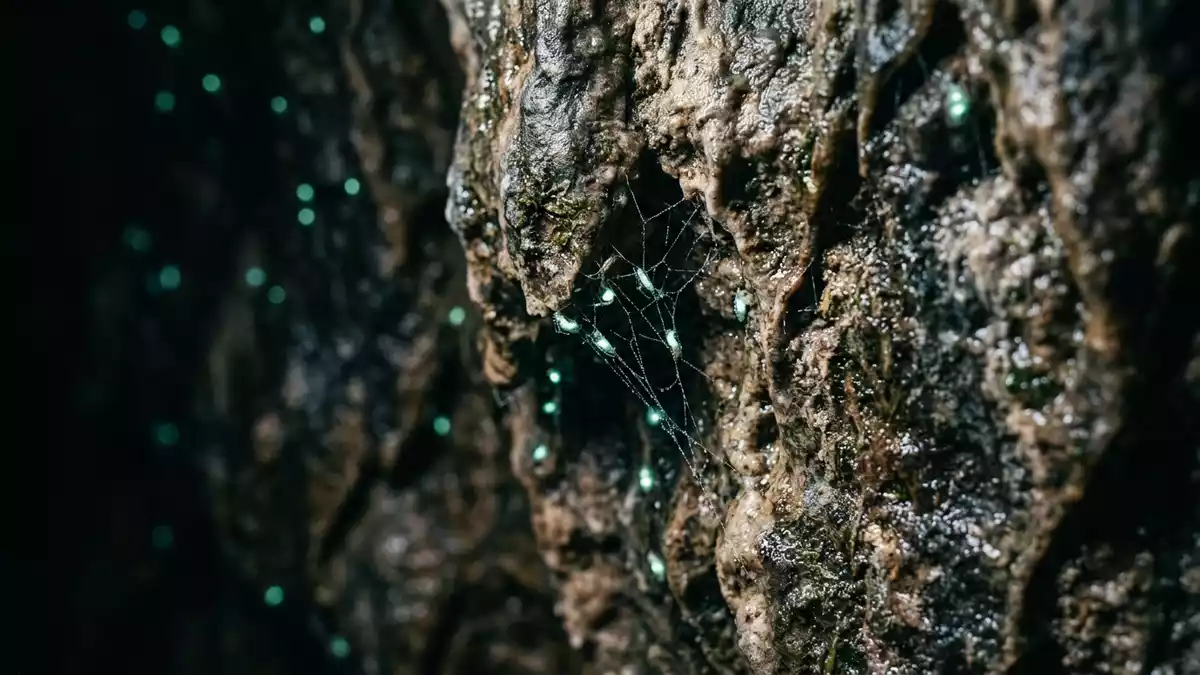
On the North Island of New Zealand, near the small settlement of Waitomo, the Waitomo Glowworm Caves lead visitors into limestone chambers lit by a canopy of bioluminescent glowworms. Formed in ancient marine limestone and opened to visitors in the late nineteenth century, the caves combine geology and ecology in a way that feels like standing beneath a subterranean night sky.
Limestone caverns shaped over millions of years
The Waitomo Glowworm Caves lie in the Waikato region, in a landscape where limestone underlies rolling farmland and pockets of native vegetation.The area is part of a karst landscape marked by sinkholes, disappearing streams and cave systems. The rock surrounding the cave formed from the compacted remains of marine organisms deposited on the seafloor around 30 million years ago during the Oligocene epoch.The limestone at Waitomo is about 30 million years old
Groundwater moving through fractures in this limestone slowly dissolved the rock, enlarging cracks into passages and chambers over geological time.Cave development is classified as Quaternary, so the voids themselves are far younger than the surrounding rock. The result is a system of caverns where stalactites and stalagmites line the ceilings and floors, formed by mineral-rich water dripping and leaving behind bands of calcite. In places the passages open into larger chambers used for guided walks and boat journeys.
A glowworm grotto like a subterranean night sky
The feature that defines Waitomo Glowworm Caves is the population of glowworms clinging to the ceilings above one of the main underground streams.The caves are known for Arachnocampa luminosa, a bioluminescent species found only in New Zealand. These larvae hang down fine threads and emit a bluish-green light that makes the ceiling resemble a dense field of stars. Seen from boats gliding quietly beneath them, the thousands of points of light group into patches and swirls that echo the curves of the rock.
The glowworms rely on the protected, humid environment of the cave, where air and water move through spaces shielded from daylight. Above them, limestone formations that took thousands of years to grow frame the grotto. In the darker sections, the contrast between the black water and the luminous ceiling gives the impression of travelling under a reversed night sky, with reflections trembling on the surface of the underground stream. The ecological focus sets these caves apart from other limestone systems where mineral formations are the main attraction.
From local exploration to an enduring visitor experience
Human encounters with the Waitomo Glowworm Caves changed in the late nineteenth century, when the underground passages were systematically explored and organised for visits. The cave was first explored in 1887 and has drawn organised visitors for more than a century, turning a geological curiosity into a recognised destination for cave tourism.The Waitomo Glowworm Cave was first explored in 1887 Over time, walkways, lighting in the dry chambers and boat access in the glowworm grotto were established, but the core experience centres on moving through a largely dark environment.
Alongside the main glowworm cave, the broader Waitomo system includes Ruakuri Cave and Aranui Cave, which are reached on separate guided tours and feature further limestone formations.Visitors can explore three caves by foot in the Waitomo region At the surface, the visitor centre uses contemporary architecture with a roof form inspired by a M?ori hinaki, or eel trap, linking the modern facilities to local cultural references.The visitor centre features a roof evoking a M?ori hinaki
Visiting Waitomo Glowworm Caves: what travellers from Western Europe should know
- The caves lie near the village of Waitomo in the Waikato region of New Zealand’s North Island, between Te K?iti and ?torohanga along State Highway 3.
- Access to the glowworm grotto involves walking on constructed paths underground and boarding a boat; the cave floor and steps can be damp and uneven.
- Guided cave experiences depart from a visitor centre on Waitomo Village Road, where facilities and tour departures for several caves in the area are concentrated.
- The official language is English and the currency is the New Zealand dollar.
- Entry requirements depend on your nationality; UK travellers can check the FCDO travel advice at gov.uk/foreign-travel-advice, Irish travellers the Department of Foreign Affairs at ireland.ie.
Searching for Waitomo Glowworm Caves on social platforms
These links open searches for Waitomo Glowworm Caves on each platform.
Frequently asked questions about Waitomo Glowworm Caves
Where are Waitomo Glowworm Caves located?
They are near the village of Waitomo in the Waikato region of New Zealand’s North Island, in the northern King Country, northwest of Te K?iti.
What should visitors expect on a guided visit?
Visits combine walking through limestone chambers with a quiet boat journey under the glowworm grotto, where bioluminescent larvae create a star-like canopy above an underground stream.
What makes Waitomo Glowworm Caves distinctive among limestone caves?
The caves stand out for their concentration of Arachnocampa luminosa glowworms in a large grotto, set within Oligocene limestone formed from ancient marine deposits and shaped into accessible chambers.


