Wat Phou and the sacred axis of Champasak
Published on 08/17/2026 at 13:34 | Editorial responsibility: Rafael Müller, Editor-in-Chief AD HOC NEWS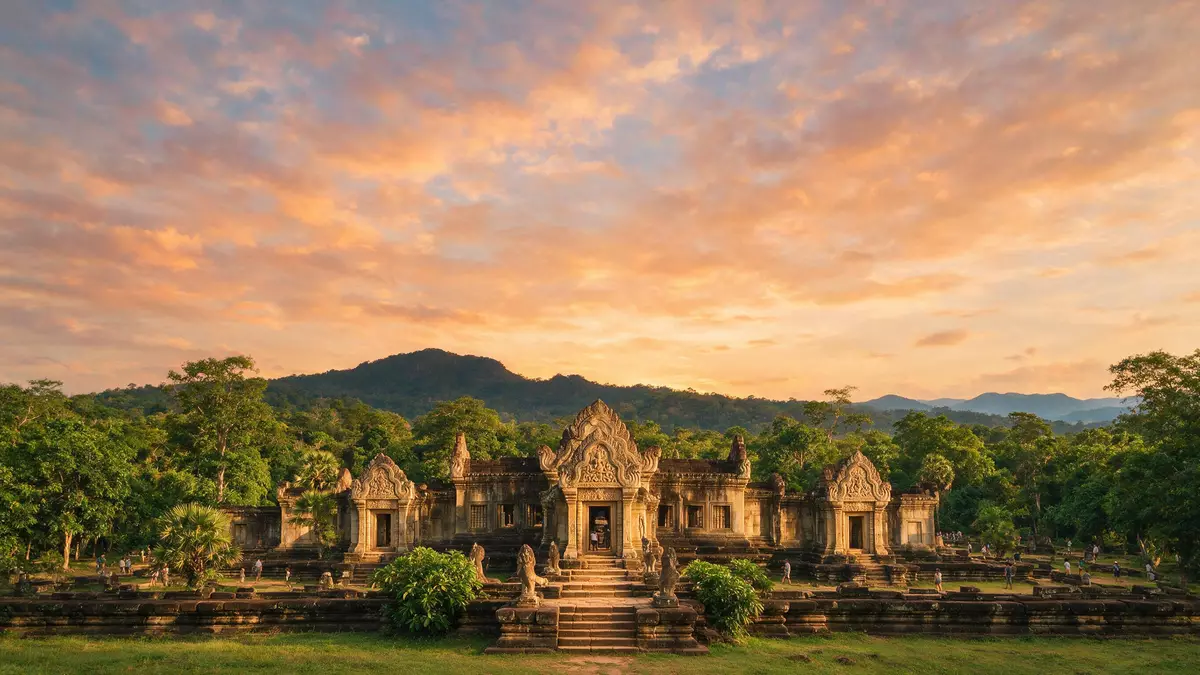
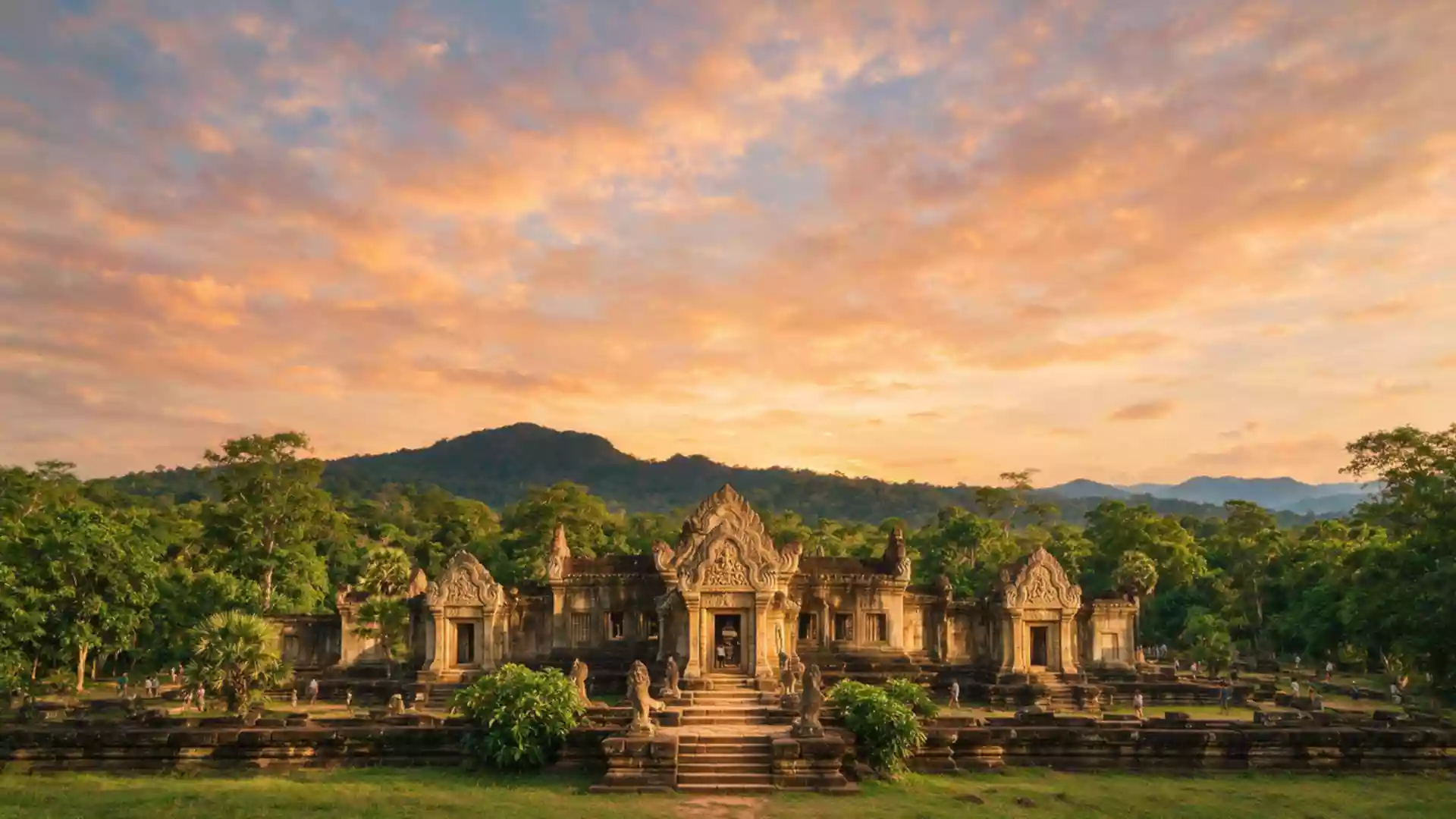
Wat Phou in Champasak, southern Laos, stretches across a broad slope from the Mekong plain towards the summit of Phou Kao, forming a long ceremonial axis that links water, terraces and sanctuaries in a single composition. This ancient Khmer temple complex, part of a wider cultural landscape recognised by UNESCO, developed between the early medieval centuries and the height of the Khmer Empire, when the site served as a major religious centre.
A mountain, a river and a planned sacred landscape
Wat Phou lies on the western bank of the Mekong River in Champasak Province, with the main temple complex climbing the lower slopes of Phou Kao Mountain. The site forms the core of a cultural landscape inscribed on the World Heritage List in 2001 as “Vat Phou and Associated Ancient Settlements within the Champasak Cultural Landscape”, a designation that covers an extensive area between river and mountain.World Heritage inscription
The sacred geography at Wat Phou uses a strong east–west axis running from the Mekong plain towards Phou Kao, linking shrines, reservoirs and terraces in a sequence more than 1 km long.Champasak cultural landscape description Approaching from the river side, visitors first encounter the remains of an ancient city laid out on the plain, then move along a broad processional way that gradually rises towards the mountain. The placement of the complex at the foot of Phou Kao reflects the importance of the mountain’s striking summit in Khmer cosmology, with the temples appearing to anchor the lower slopes to the wider landscape.
Khmer architecture between the seventh and thirteenth centuries
Wat Phou is a ruined Khmer Hindu temple complex whose origins reach back to the fifth century CE, with most surviving structures built between the seventh and thirteenth centuries.early and classic Khmer phases The complex formed part of the wider Khmer world that would later produce Angkor, and its architecture shows both early experimentation and mature temple construction. Many of the structures stand in sandstone and laterite, with carved lintels and pediments depicting Hindu deities and mythological scenes.
The principal sanctuary occupies a terrace near the base of a cliff where a sacred spring emerges, and it represents the highest point of the main processional route.main sanctuary description Lower on the slope, pairs of laterite buildings flank the processional way, forming symmetrical galleries that once framed the ascent. Many of these have partially collapsed, but their foundations and wall fragments still give a clear sense of the original plan. Stone stairways climb between terraces, and scattered carvings and inscriptions point to successive phases of building and repair as the site evolved through different reigns.
From Hindu sanctuary to living Buddhist site
Originally, Wat Phou was dedicated to Shiva and functioned as a major Hindu pilgrimage centre within the Khmer Empire, closely linked to the royal city that stood on the Mekong plain below.role as Hindu centre Archaeological evidence suggests that the earliest shrines date from around the fifth century, with substantial building programmes in the eleventh to thirteenth centuries, during the period when Khmer rulers expanded their influence across mainland South-east Asia.
In its present form, the main sanctuary at Wat Phou houses Buddhist images, reflecting the region’s later shift from Hinduism to Theravada Buddhism.description of Wat Phou complex The result is a layered religious landscape: ancient stone terraces and Shiva-linked iconography coexist with more recent Buddha statues, small shrines and offerings. The temple complex remains a place of worship for local communities, and traces of ritual use appear in incense sticks, cloth draped on images and small altars tucked into corners of the ruins.
Visiting Wat Phou: what travellers from Western Europe should know
- Wat Phou lies near the town of Champasak in southern Laos, on the west bank of the Mekong River, south of the regional centre of Pakse.
The site is reached overland from Pakse and Champasak by road, with local transport continuing to the temple area. - The temple complex climbs the lower slopes of Phou Kao, and visiting involves walking along the processional way and up stone stairways between terraces.
The upper sanctuary stands on a high terrace at the foot of the cliff, so the final section of the route includes a steep ascent over uneven stone steps. - The wider cultural landscape includes the Mekong plain, remnants of an ancient city and reservoirs, so exploring beyond the main sanctuary involves longer walks across relatively open terrain.
- The official language is Lao and the currency is the Lao kip.
- Entry requirements depend on your nationality; UK travellers can check the FCDO travel advice at gov.uk/foreign-travel-advice, Irish travellers the Department of Foreign Affairs at ireland.ie.
Searching for Wat Phou on social platforms
These links open searches for Wat Phou on each platform.Frequently asked questions about Wat Phou
Where is Wat Phou and what is its setting?
Wat Phou is in Champasak Province in southern Laos, on the west bank of the Mekong River, with the main temple complex climbing the lower slopes of Phou Kao Mountain.
What should visitors expect on a visit to Wat Phou?
Visitors move along an ancient processional way through terraces, ruined laterite buildings and reservoirs, then climb stone stairways to reach the main sanctuary near a sacred spring on the cliff base.
What makes Wat Phou distinctive among temple sites in South-east Asia?
Wat Phou combines early and classic Khmer architecture with a large planned sacred landscape that aligns city remains, shrines, waterworks and mountain slopes along a single ceremonial axis between river and summit.