
Yaxha and the Maya city beside a forest lake
Published on 09/23/2026 at 03:45 | Editorial responsibility: Rafael Müller, Editor-in-Chief AD HOC NEWS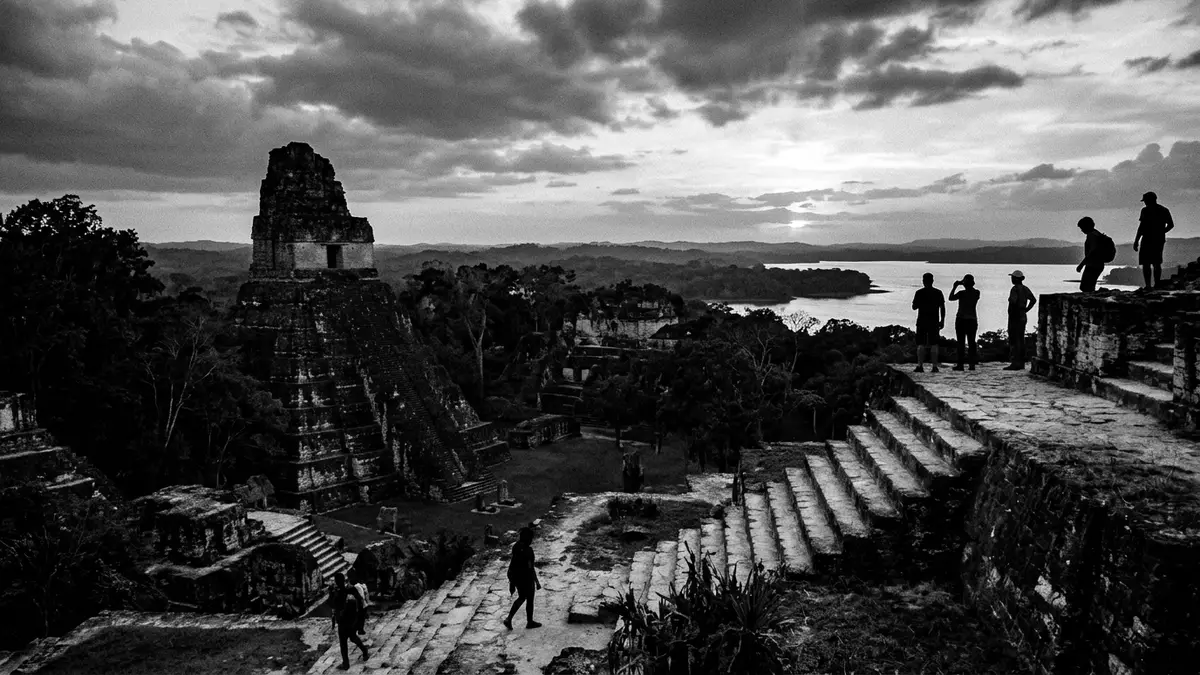
Yaxha is a Maya archaeological site in Guatemala’s Petén Basin, arranged along a forested ridge beside Lake Yaxha. Its temples, plazas and causeways form an elongated urban landscape, where limestone architecture meets the still surface of a tropical lake.
Yaxha on the ridge above Lake Yaxha
The site lies in north-eastern Petén, within the municipalities of Flores and Melchor de Mencos. The ancient city occupies a long ridge facing Lake Yaxha, with forest extending between its monumental groups and the surrounding lowlands.
Water is part of the setting rather than a distant backdrop. Lake Yaxha belongs to the eastern Petén lake region, while reservoirs and causeways appear among the city’s plazas. Limestone, raised platforms and stepped pyramids define the built landscape.
A Maya city shaped across many centuries
Settlement at Yaxha began during the Middle Preclassic period, between 1000 and 350 BC. The city reached its greatest political and ceremonial importance during the Classic period, from approximately AD 250 to 900.
Its history belongs to the wider Maya world of the central lowlands. Yaxha maintained strong links with Tikal, Caracol in Belize and Calakmul in Mexico. The city’s surviving architecture records a long sequence of public, residential and ceremonial activity.
More than 500 recorded structures form the core of the site. They include temple pyramids, acropolises, palaces, residential compounds, ball courts, altars and carved stelae. The number gives the ruins an urban scale, even where trees separate one architectural group from another.
Plazas, pyramids and the language of stone
Yaxha contains monumental clusters linked by causeways and open plazas. Temple platforms rise above the surrounding vegetation, while stairways connect different levels of the ridge. The recorded structures at Yaxha include the architectural forms associated with a major Maya centre.
Twin Pyramid Complexes form part of Yaxha’s ceremonial architecture. These groups contain paired pyramids facing an enclosed plaza, with additional platforms and monuments defining the space. Their arrangement belongs to a recognised Maya architectural tradition in the Petén.
Stelae and altars add another layer to the site. Their carved surfaces once carried royal and ceremonial messages, although weathering and the passage of centuries have left different monuments in different states. The stonework remains connected to the political world of Classic Maya cities.
The site is part of Yaxha-Nakum-Naranjo National Park, a protected landscape covering archaeological remains and tropical forest. The park also includes Nakum, Naranjo and Topoxte, linking several Maya centres within the Petén region.
Visiting Yaxha: what travellers from Western Europe should know
- Yaxha lies north-east of Flores, beside Lake Yaxha, in the Petén department. Road access from Flores leads towards the Belize border and the archaeological park.
- The site extends across a forested ridge, with plazas, stairways, causeways and temple platforms spread among the trees. Visiting involves walking over uneven ground and climbing stone steps.
- The archaeological landscape includes Lake Yaxha, reservoirs and raised causeways. The forest can obscure buildings between the principal architectural groups.
- The official language is Spanish and the currency is the Guatemalan quetzal.
- Entry requirements depend on your nationality; UK travellers can check the FCDO travel advice at gov.uk/foreign-travel-advice, Irish travellers the Department of Foreign Affairs at ireland.ie.
Searching for Yaxha on social platforms
These links open searches for Yaxha on each platform.Frequently asked questions about Yaxha
Where is Yaxha?
Yaxha is in the Petén department of northern Guatemala, north-east of Flores and beside Lake Yaxha. It lies within Yaxha-Nakum-Naranjo National Park.
What can visitors see at Yaxha?
The archaeological area contains temple pyramids, plazas, acropolises, palaces, residential compounds, ball courts, causeways, stelae and altars. Forest separates many of these groups across the ridge.
What distinguishes Yaxha from a small ruin site?
Yaxha contains more than 500 recorded structures and preserves an extensive urban landscape beside a lake. Its Middle Preclassic origins and Classic-period monuments span many centuries of Maya history.


