
Zugspitze and the limestone summit above Bavaria
Published on 09/22/2026 at 16:12 | Editorial responsibility: Rafael Müller, Editor-in-Chief AD HOC NEWS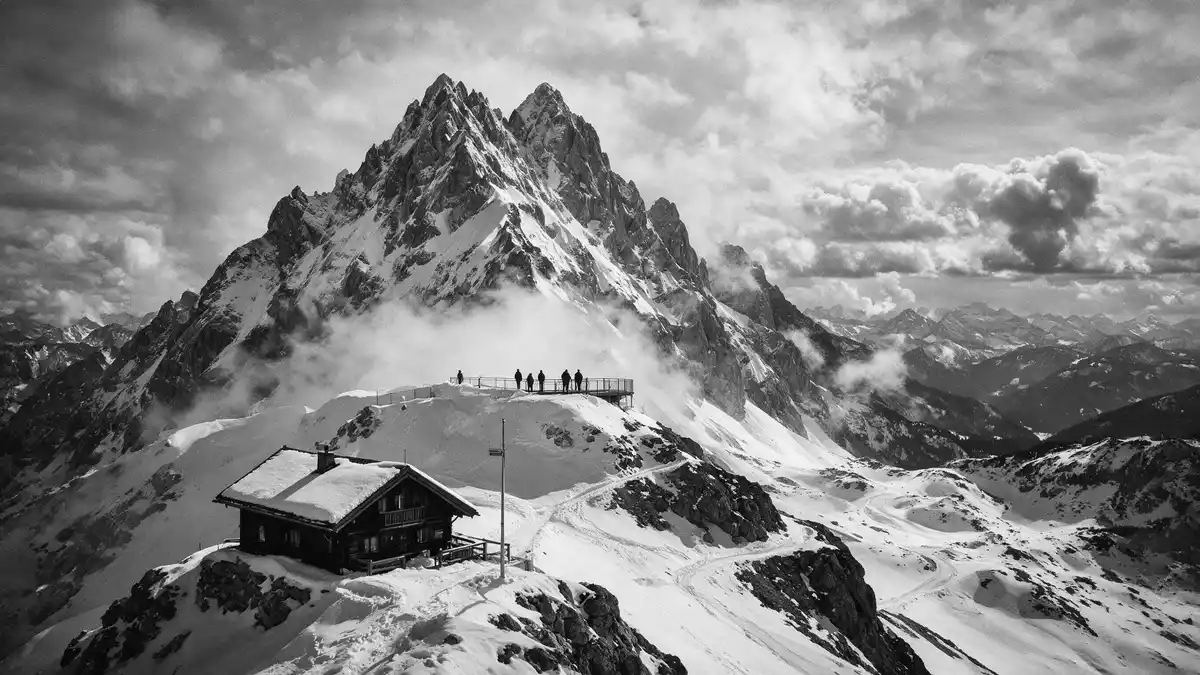
Zugspitze rises south of Garmisch-Partenkirchen as a limestone summit on the border between Germany and Austria. At 2,962 m (9,718 ft), it is Germany’s highest mountain, with a landscape of exposed rock, glacier remnants and high Alpine structures.
Zugspitze: a limestone summit on the border
The mountain belongs to the Wettersteingebirge in the Bavarian Alps. Its upper slopes are formed largely from Wetterstein limestone, a pale rock that appears in terraces, walls and sharply broken ridges. The summit stands above the Zugspitzplatt, a high karst plateau containing the remains of glaciers.
The national boundary between Bavaria and Tyrol crosses the mountain area. Germany lies to the north, while Austria extends south of the summit. From Garmisch-Partenkirchen, the mountain rises as the dominant high point of the surrounding Wetterstein landscape. Germany’s highest mountain reaches the same elevation recorded for the summit in geographical references.
From Josef Naus to the summit cross
The first officially recorded ascent took place on 27 August 1820. Lieutenant Josef Naus reached the summit with the guide Johann Georg Tauschl and an assistant during a surveying expedition connected with the mapping of Bavaria.
A summit cross was erected in August 1851 under the direction of Pastor Christoph Ott. Lightning, severe weather and wartime damage affected the structure across its history. A replica measuring 4.88 m (16 ft) and weighing 300 kg marks the summit area. The summit cross history connects the mountain with a long sequence of ascents, repairs and replacements.
Railways, cable cars and the high plateau
Zugspitze combines an Alpine summit with a network of mountain transport. The Bavarian Zugspitze Railway climbs from Garmisch-Partenkirchen towards the plateau, while cable cars connect the summit area with Eibsee and the Austrian side.
The cogwheel railway began operating in 1930. The plateau and summit infrastructure followed in the same period, creating a route from the valley into a landscape once reached only by long mountain approaches. The railway’s 1930 opening remains part of the mountain’s transport history.
Visitors encounter a mixture of natural and built elements: limestone ridges, snowfields, glacier remnants, viewing terraces, railway buildings, aerial cableways and the gilded cross above the rocks. The Wetterstein limestone gives the summit its geological character, while the remaining ice reflects the changing Alpine environment.
Visiting Zugspitze: what travellers from Western Europe should know
- Zugspitze lies south of Garmisch-Partenkirchen on the German-Austrian border. The Bayerische Zugspitzbahn railway begins in Garmisch-Partenkirchen, and cable cars operate from Eibsee and the Tyrolean side.
- The summit reaches 2,962 m (9,718 ft). Alpine altitude, exposed limestone and glacier terrain define the upper mountain, while walking routes include the Reintal and Höllental approaches.
- The Zugspitzplatt is a high plateau below the summit. It contains the remaining Schneeferner glacier areas and forms a distinct landscape from the exposed summit ridge.
- The official language is German and the currency is the euro.
Searching for Zugspitze on social platforms
These links open searches for Zugspitze on each platform.
Frequently asked questions about Zugspitze
Where is Zugspitze?
Zugspitze stands in the Wettersteingebirge on the border between Bavaria in Germany and Tyrol in Austria, south of Garmisch-Partenkirchen.
What can travellers expect on the mountain?
The upper area combines exposed limestone, high-altitude glacier remnants, railway facilities, cable cars, viewing terraces and the summit cross.
What makes Zugspitze distinctive?
Its defining combination is a 2,962 m (9,718 ft) limestone summit, a national border, the Zugspitzplatt and transport routes reaching the high Alpine terrain.


