
Zugspitze, where Germany meets the high Alps
Published on 08/15/2026 at 14:28 | Editorial responsibility: Rafael Müller, Editor-in-Chief AD HOC NEWS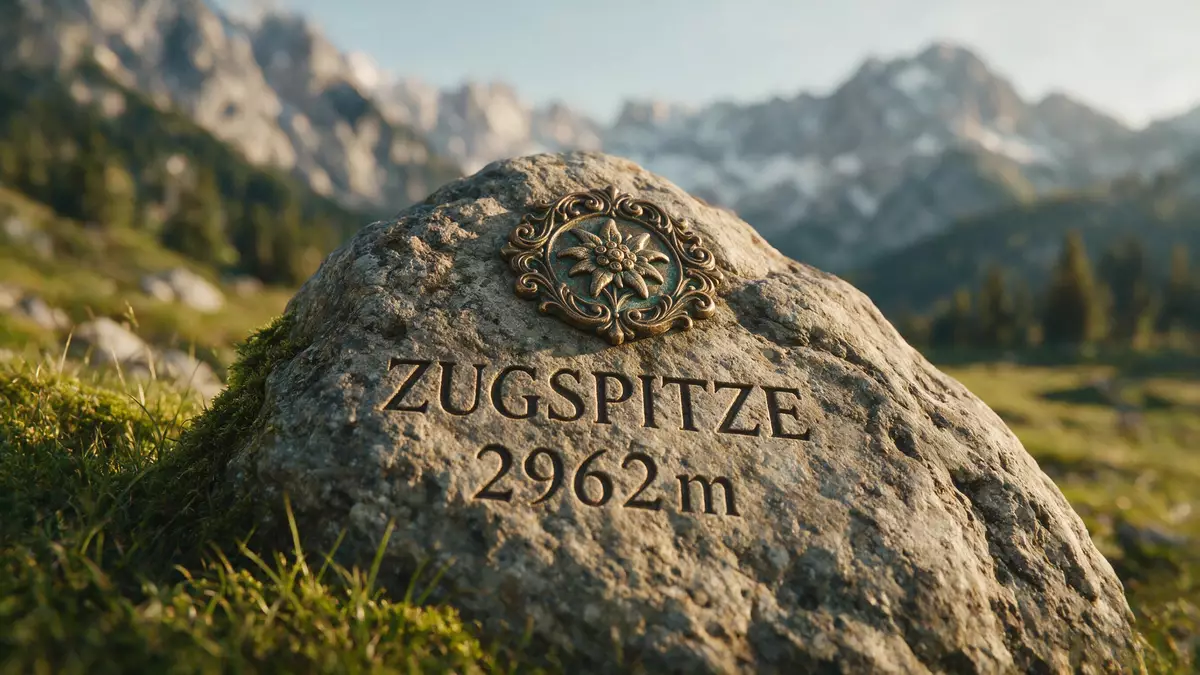
Zugspitze rises above Garmisch-Partenkirchen as Germany’s highest mountain, a limestone summit on the Bavaria–Tyrol border that reaches 2,962 m (9,718 ft) above sea level.Germany’s highest mountain The peak crowns the Wetterstein range and brings the high Alpine landscape right to the edge of southern Germany.
A limestone summit on the Bavaria–Tyrol frontier
Zugspitze forms part of the Wetterstein Mountains in the Bavarian Alps, with the state of Bavaria on one side and the Austrian region of Tyrol on the other.Border between Germany and Austria The mountain’s main summit stands above the village of Grainau and the resort of Garmisch-Partenkirchen, while the Austrian side drops towards Ehrwald and the Zugspitz Arena.
The prevailing rock on Zugspitze is compact Wetterstein limestone, created in a shallow sea around 210 million years ago and later uplifted into its present position.Wetterstein limestone The steep faces and broken ridges are typical of this rock, and the summit ridge carries several distinct tops, including an eastern peak that gives the official elevation for the mountain.
Glaciers, snowfields and the “Top of Germany” plateau
High on the flanks of Zugspitze lie the Schneeferner and Höllentalferner, glaciers that are among the last surviving ice fields in Germany.Glaciers on Zugspitze The Northern Schneeferner spreads below the summit plateau, while the Höllentalferner lies tucked into a cirque above the dramatic Höllental valley.
Below the summit buildings on the German side, the glacier plateau forms a high, wide basin used as a ski area with lifts and marked pistes.Germany’s only glacier ski area Close by stands a small church, consecrated in 1981 and described as the highest church in Germany, set against the backdrop of ice and rock.
Summit cross, first ascents and mountain railways
The first recorded ascent of Zugspitze took place on 27 August 1820, when Lieutenant Josef Naus reached the summit with his survey team.First ascent in 1820 In 1851 a summit cross was erected, beginning a tradition that continues with the gilded cross that marks the highest point on the German summit area.Summit cross history
Early climbers reached Zugspitze through long routes such as the Reintal and Höllental, approaches that remain classic Alpine ascents.Reintal and Höllental routes In the twentieth century, a cogwheel railway from Garmisch-Partenkirchen and cable cars from Eibsee and the Austrian side turned the peak into a high-altitude viewpoint reached by train and lift rather than rope and ice axe.Cable cars and cogwheel train
Visiting Zugspitze: what travellers from Western Europe should know
- Zugspitze rises south of Garmisch-Partenkirchen in southern Germany, on the border with the Austrian region of Tyrol, and is approached from valleys on both sides.
- German visitors commonly travel via Garmisch-Partenkirchen and the Bayerische Zugspitzbahn cogwheel railway, while others use cable cars from Lake Eibsee or from the Ehrwald side in Austria.
- The summit buildings and terraces sit on a rocky crest above the glacier plateau, and outdoor areas can be exposed to wind and strong sun in fine weather.
- Waymarked Alpine routes such as the Reintal and Höllental ascents involve long days in high mountain terrain, with sections on rock, scree and, in places, permanent snow or ice.
- The official language is German and the currency is the euro.
Searching for Zugspitze on social platforms
These links open searches for Zugspitze on each platform.
Frequently asked questions about Zugspitze
Where is Zugspitze?
Zugspitze stands south of Garmisch-Partenkirchen in Bavaria, on the border between Germany and the Austrian region of Tyrol in the Wetterstein range.
What can visitors expect on a visit to Zugspitze?
Visitors encounter a high Alpine summit with terraces, a glacier plateau used as a ski area, and broad views across surrounding peaks into Germany, Austria, Switzerland and Italy.
What makes Zugspitze distinctive among Alpine peaks?
Zugspitze combines the status of Germany’s highest mountain with accessible summit platforms, glaciers, a long climbing history dating from 1820 and the landmark golden summit cross.


