
Centro Historico de Ouro Preto and its baroque hillsides
Published on 09/10/2026 at 07:31 | Editorial responsibility: Rafael Müller, Editor-in-Chief AD HOC NEWS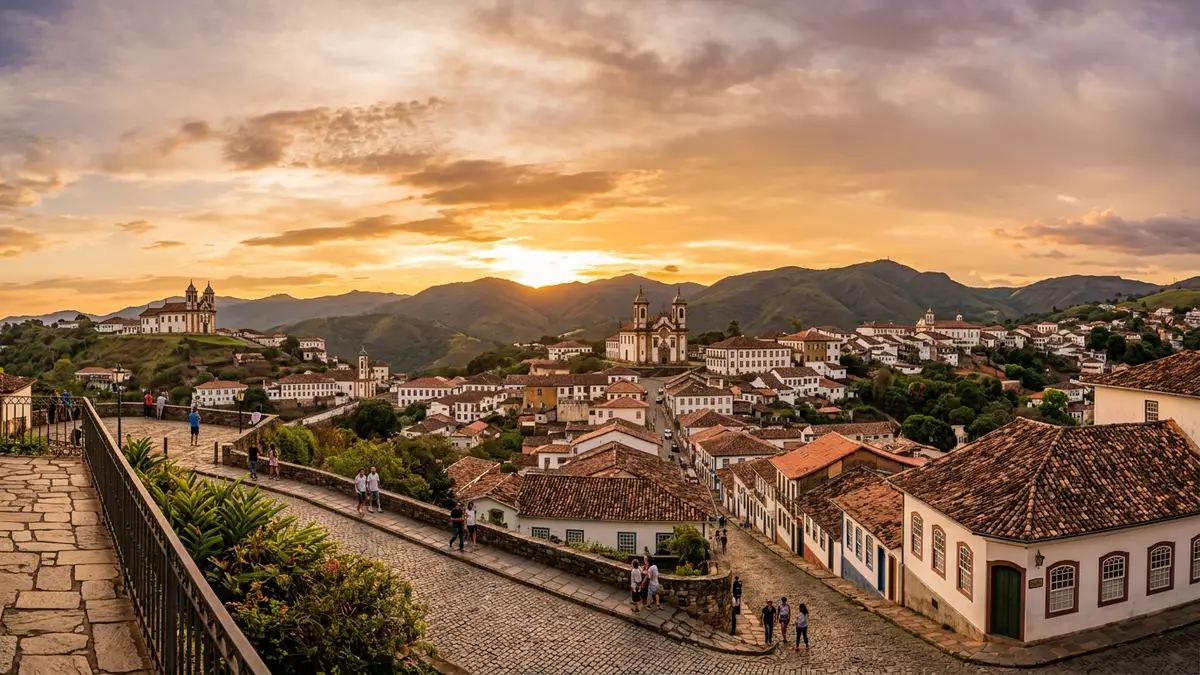
Centro Historico de Ouro Preto is the historic centre of Ouro Preto in south-eastern Brazil, a hillside district where colonial streets rise past baroque churches and tightly packed houses from the eighteenth century. Set among the Serra do Espinhaço mountains in the state of Minas Gerais, this old core preserves streets, squares and slopes shaped during Brazil’s gold rush, when Ouro Preto served as a colonial mining capital under Portuguese rule.
Baroque hills and a layered colonial streetscape
The historic centre unfolds across steep terrain, with cobbled streets that follow the contours of the hills and connect a series of squares, stairways and church forecourts. The overall urban form belongs to the period when Ouro Preto, known then as Vila Rica, grew around gold deposits and became an administrative and religious centre for Minas Gerais in the eighteenth century.Historic Town of Ouro Preto Within this layout, churches, fountains, bridges and civic buildings stand close to residential terraces, producing dense sequences of façades where plastered walls, balconies and tiled roofs run along the slopes.
From different points in Centro Historico de Ouro Preto, the hillsides stack layers of architecture above one another, with church towers rising above lines of houses and civic buildings framing the main square. Praça Tiradentes, a central square at the heart of the historic district, is enclosed by former government buildings and museum structures that recall Ouro Preto’s role as a provincial capital.colonial architecture and central square Standing here, the reader sees how the town’s steep topography and its colonial street plan are inseparable, with each street segment climbing or dropping as it leaves the square and threads past further clusters of houses.
Baroque churches, sculptors and colonial façades
Centro Historico de Ouro Preto is best known for its concentration of eighteenth-century religious buildings, many of them designed or decorated in the Baroque style that marked Brazil’s “golden age”. Among the most celebrated is the Church of Saint Francis of Assisi, whose carved stonework and sculpted decoration are associated with the work of Antônio Francisco Lisboa, the sculptor and architect known as Aleijadinho.Aleijadinho’s baroque churches Other churches, including the Church of Our Lady of the Rosary and various parish churches scattered across the hills, contribute altarpieces, wood carvings and gilded interiors to the ensemble.
Religious structures are not the only buildings that give Centro Historico de Ouro Preto its character. Colonial houses, some grouped in sets attributed to designers such as José Fernandes Pinto Alpoim, line the streets with repeated window rhythms and overhanging balconies.Conjunto Alpoim houses Former government palaces, town hall buildings and an old jail stand around Praça Tiradentes, now housing museums and cultural institutions that occupy the same structures. This reuse of colonial architecture for civic and museum functions keeps the eighteenth-century façades active within daily life, and the result is a streetscape where religious, residential and official buildings from the mining era coexist within a compact district.
UNESCO recognition and the town’s gold-rush origins
The wider Historic Town of Ouro Preto, which includes Centro Historico de Ouro Preto, was inscribed as a UNESCO World Heritage Site in 1980 as Brazil’s first cultural property on the list.UNESCO inscription in 1980 The listing emphasises the coherence of the colonial urban fabric, the quality of its Baroque architecture and the way the town’s layout still reflects the organisation of an eighteenth-century gold-mining community. Oro Preto’s rise is tied to deposits discovered at the end of the seventeenth century, when the settlement became a focal point for gold extraction under Portuguese rule and, later, a provincial capital.
National protection for the city’s architecture predates the UNESCO listing. Ouro Preto was decreed a national monument in the 1930s to preserve its late eighteenth-century public buildings, churches and houses, and restoration programmes followed in later decades.national monument status Together, national and international recognition frame Centro Historico de Ouro Preto not only as a preserved colonial townscape but also as a record of Brazil’s gold economy, religious practice and artistic production in the period when Baroque architecture flourished in Minas Gerais.
Visiting Centro Historico de Ouro Preto: what travellers from Western Europe should know
- Centro Historico de Ouro Preto lies within the city of Ouro Preto in the state of Minas Gerais in south-eastern Brazil and is reached along urban streets that rise from lower neighbourhoods and nearby road connections.location in Minas Gerais
- The historic centre occupies steep hillsides, and many routes involve cobbled slopes and stairways, so walking between squares and churches requires confidence on uneven surfaces.
- Ouro Preto stands in the Serra do Espinhaço mountains inland from Brazil’s Atlantic coast, and Centro Historico de Ouro Preto forms the dense old core of this former mining town.
- The official language is Portuguese and the currency is the Brazilian real.
- Entry requirements depend on your nationality; UK travellers can check the FCDO travel advice at gov.uk/foreign-travel-advice, Irish travellers the Department of Foreign Affairs at ireland.ie.
Searching for Centro Historico de Ouro Preto on social platforms
These links open searches for Centro Historico de Ouro Preto on each platform.
Frequently asked questions about Centro Historico de Ouro Preto
Where is Centro Historico de Ouro Preto located?
Centro Historico de Ouro Preto lies in the city of Ouro Preto in the state of Minas Gerais in south-eastern Brazil, within the Serra do Espinhaço mountains.location in Serra do Espinhaço
What should visitors expect on a walk through the historic centre?
Visitors encounter steep cobbled streets, stairways, clustered colonial houses and numerous eighteenth-century churches, with squares such as Praça Tiradentes offering views of hillsides and façades.
What makes Centro Historico de Ouro Preto distinctive among historic town centres?
The district combines dense Baroque religious architecture, colonial civic buildings and a hillside urban plan shaped by the eighteenth-century gold rush, all recognised within the Historic Town of Ouro Preto’s UNESCO World Heritage status.UNESCO World Heritage Site


