
Kigali Genocide Memorial on a hillside of remembrance
Published on 08/26/2026 at 09:00 | Editorial responsibility: Rafael Müller, Editor-in-Chief AD HOC NEWS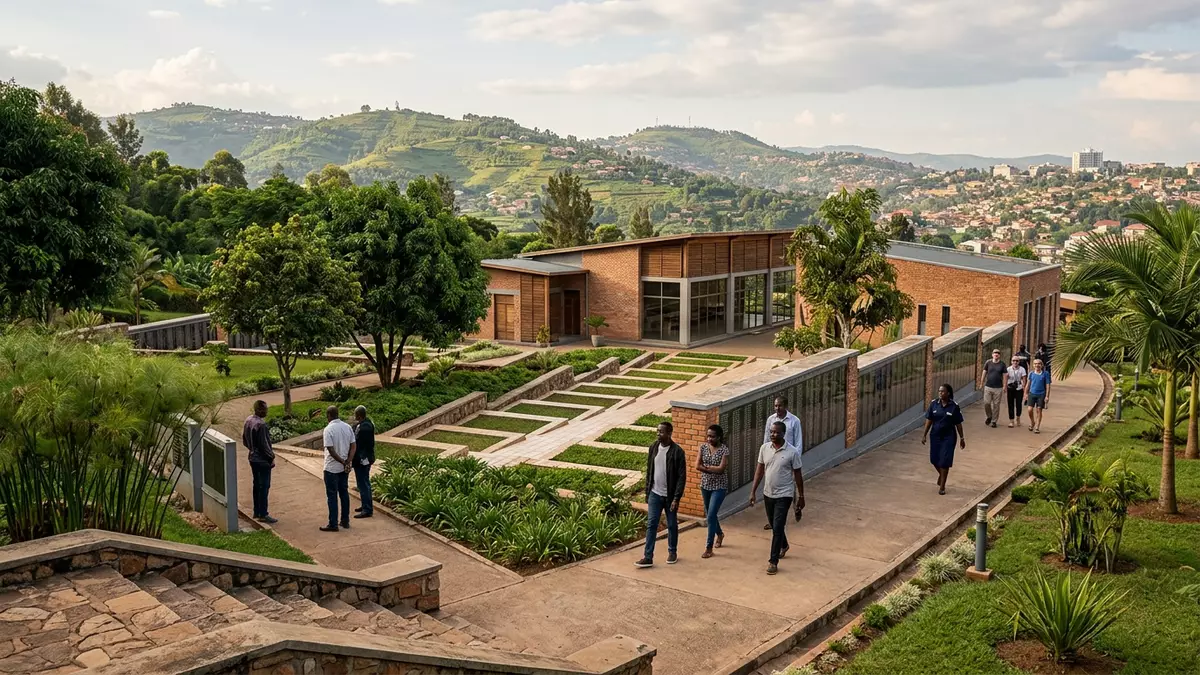
Kigali Genocide Memorial stands on a hillside in the Gisozi district of Kigali, bringing together mass graves, memorial gardens and a museum dedicated to the 1994 Genocide against the Tutsi. Opened in 2004 on the tenth anniversary of the killings, it combines a burial ground for more than 250,000 victims with exhibition spaces and archives that trace how Rwanda’s history reached the events of that year.
A hill where architecture and graves share the slope
The most striking aspect of Kigali Genocide Memorial is the way its architecture and burial ground share the same slope. The site occupies a hill in Gisozi overlooking Kigali, with memorial buildings on the upper terraces and mass graves stepping down the hillside beneath them.Kigali Genocide Memorial occupies a slope in the Gisozi area of Kigali The built elements sit close to the crest, while the concrete grave slabs extend along lower levels of the hill, edged by lawns and planting.
The memorial’s core buildings have a low-rise, contemporary civic character rather than monumental stonework. Walls in concrete and other modern materials frame courtyards and galleries, opening towards the gardens and burial area rather than turning away from them.The design of the Kigali Genocide Memorial is described as understated, with low buildings and simple lines Visitors move between inside and outside spaces, with the museum and remembrance areas laid out as parts of the same hillside rather than as separate zones.
Mass graves, gardens and a museum for the 1994 genocide
Kigali Genocide Memorial is the principal national site of remembrance for the 1994 Genocide against the Tutsi, in which an estimated 800,000 people were killed between April and July of that year.It is described as the principal site of remembrance for the Genocide against the Tutsi The remains of more than 250,000 victims are buried in the mass graves, making the site both a cemetery and a museum.Kigali’s authorities chose the hillside in Gisozi as a burial place for 250,000 residents murdered during the genocide
Inside the memorial buildings, three main permanent exhibitions explain the background to the genocide, document the killings themselves and place them in the wider context of other genocides. One gallery focuses on the events in Rwanda, another on children murdered in the genocide, and a further exhibition examines atrocities elsewhere in the world.The centre houses a museum with three permanent exhibitions, memorial gardens and mass graves The Genocide Archive of Rwanda, housed on the site, collects testimony and documentation, making the memorial a working archive as well as a place of mourning.
From collaboration to landscape of remembrance
The memorial’s form and role grew from collaboration between Rwandan authorities and the Aegis Trust, an organisation founded out of the United Kingdom’s National Holocaust Centre.The Kigali Genocide Memorial is the result of collaboration between Rwandan authorities and the Aegis Trust for Genocide Prevention Kigali City Council and national institutions partnered with Aegis in the early 2000s to create a memorial and educational centre on the Gisozi hillside, culminating in the official inauguration in April 2004.Kigali Genocide Memorial was inaugurated in April 2004 on the tenth anniversary of the genocide
Landscape and architecture are closely linked on the site. Gardens with shrubs, trees and lawns thread between the burial structures, laying out routes for reflection without separating visitors from the physical reality of the graves.The memorial gardens and mass graves form part of a wider Genocide Memorial Park masterplan An amphitheatre designed by John McAslan + Partners stands within this landscape, providing a venue for commemorative and educational gatherings linked to the memorial’s work.An amphitheatre designed by John McAslan + Partners is part of the site
Visiting Kigali Genocide Memorial: what travellers from Western Europe should know
- Kigali Genocide Memorial stands on a hillside in the Gisozi district of Kigali, north of the city centre. It is reached by road from central Kigali districts.
- The site occupies a slope with terraces, gardens and steps between levels. Paths run alongside the mass graves and up to the museum buildings.
- The official language in Rwanda is Kinyarwanda alongside English and French, and the currency is the Rwandan franc.
- Entry requirements depend on your nationality; UK travellers can check the FCDO travel advice at gov.uk/foreign-travel-advice, Irish travellers the Department of Foreign Affairs at ireland.ie.
Searching for Kigali Genocide Memorial on social platforms
These links open searches for Kigali Genocide Memorial on each platform.
Frequently asked questions about Kigali Genocide Memorial
Where is Kigali Genocide Memorial located?
Kigali Genocide Memorial stands on a hillside in the Gisozi district of Kigali in Rwanda, north of the city centre, on a slope overlooking the capital.
What can visitors expect during a visit?
Visitors encounter mass graves, memorial gardens and a museum with permanent exhibitions on the 1994 Genocide against the Tutsi, alongside archives and educational spaces.
What makes Kigali Genocide Memorial distinctive among genocide memorials?
The combination of a major burial ground, a museum with three core exhibitions and the Genocide Archive of Rwanda within one landscaped hillside makes Kigali Genocide Memorial distinctive.


