
Musee du Bardo in Tunis and its palace of mosaics
Published on 09/14/2026 at 09:42 | Editorial responsibility: Rafael Müller, Editor-in-Chief AD HOC NEWS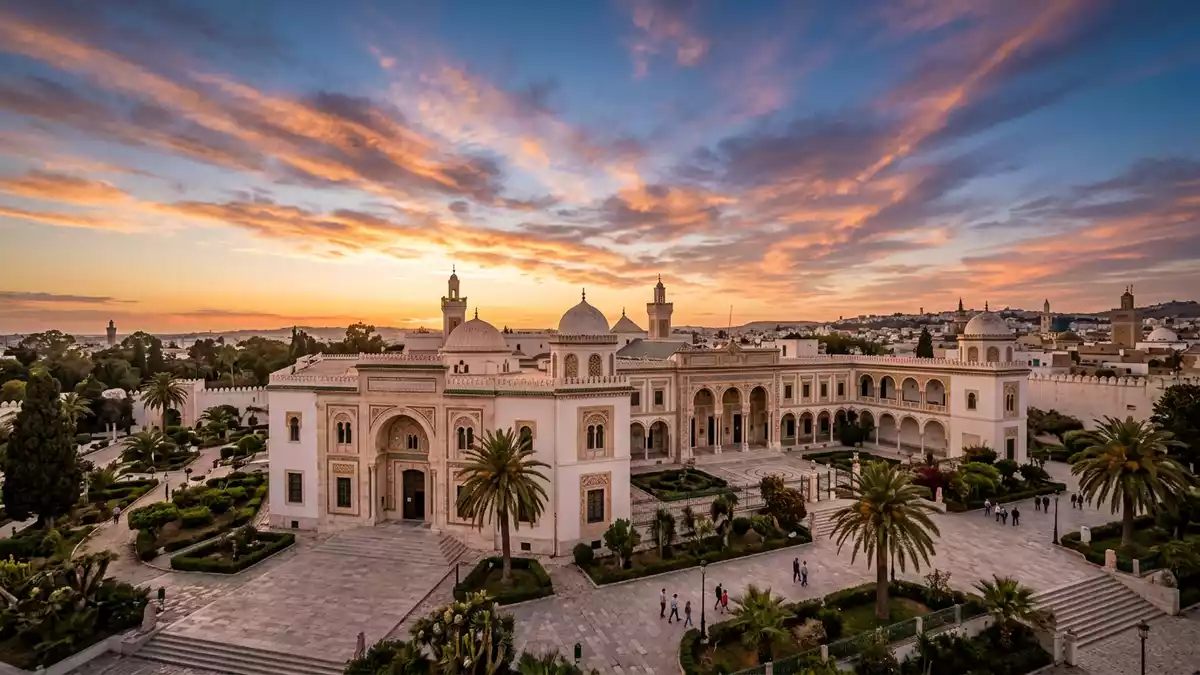
Musee du Bardo in Tunis is Tunisia’s national archaeological museum, housed in a historic palace complex at Le Bardo whose mosaic-lined galleries trace the region’s past from antiquity through the Islamic periods.national archaeological museum
A former beylical palace turned museum
Musee du Bardo occupies part of the Bardo palace complex in the suburb of Le Bardo, west of central Tunis, in buildings developed over several centuries by Tunisian rulers.palace complex developed by Tunisian rulers The palace has roots in the Hafsid period, with construction beginning in the fifteenth century and subsequent expansions under the Husainid beys in the seventeenth and nineteenth centuries.edified from the fifteenth century
The decision to create a museum at Bardo was taken in 1882, using the former beylical residence as a setting for archaeological collections from across Tunisia.creation decided in 1882 The institution was officially inaugurated on 7 May 1888 under the name Musée Alaoui, linked to the Husainid sovereign Ali Bey, and was raised to the rank of national museum after Tunisia’s independence in 1956.inaugurated on 7 May 1888
Architectural blend of palace wings and galleries
The building that houses Musee du Bardo brings together older palace wings with later gallery additions, creating a sequence of spaces that move between former apartments and broad exhibition halls.sequence of galleries Architectural detail reflects a combination of Maghrebi, Ottoman and Italian influences, with Andalusian-Moorish decoration particularly evident in stucco work and tiled surfaces.Andalusian-Moorish and Ottoman influences
Visitors encounter courtyards, colonnaded halls and salons where carved ceilings, ornamental plaster and marble elements frame the displays.carved ceilings and marble state rooms The museum is arranged over a ground floor and two upper levels, with rooms grouped broadly by period so that prehistoric finds, Punic artefacts, Roman works, early Christian items and Islamic art each occupy their own suites of galleries.ground floor and two upper floors
Mosaics and collections from across Tunisia
Musee du Bardo is internationally recognised for the scale of its Roman mosaic holdings, formed through excavations at sites across Tunisia and now assembled in extensive mosaic halls.Roman mosaic collection These floor panels, often lifted from villas and public buildings at places such as Carthage, Dougga and El Djem, depict mythological figures, hunting scenes, agricultural work and episodes from everyday urban life in Roman Africa.mosaics sourced from sites including Carthage and Dougga
Beyond mosaics, the museum’s departments cover prehistoric material, Libyco-Punic antiquities, Greek and Roman sculpture, early Christian artworks, Islamic ceramics and manuscripts, and finds such as the cargo from the Mahdia shipwreck.departments across periods Together, these collections chart Tunisia’s history from the earliest human presence through Carthaginian, Roman and Byzantine eras into the Islamic and Ottoman periods, with the palace architecture giving each section a distinct character.national museum of arts and history
Visiting Musee du Bardo: what travellers from Western Europe should know
- Musee du Bardo stands in the Le Bardo district to the west of central Tunis, reached by urban roads that connect the suburb with the city’s wider transport network.
- Inside the museum building, movement between levels involves staircases within the palace wings and gallery sections, including some narrow flights that reflect the historic layout.
- The museum sits at modest urban altitude, and its galleries occupy enclosed palace rooms and halls rather than exposed outdoor terrain.
- The official language in Tunisia is Arabic and the currency is the Tunisian dinar.
- Entry requirements depend on your nationality; UK travellers can check the FCDO travel advice at gov.uk/foreign-travel-advice, Irish travellers the Department of Foreign Affairs at ireland.ie.
Searching for Musee du Bardo on social platforms
These links open searches for Musee du Bardo on each platform.Frequently asked questions about Musee du Bardo
Where is Musee du Bardo located?
Musee du Bardo stands in the Le Bardo suburb of Tunis, to the west of the city centre, within the historic Bardo palace complex.
What can visitors expect inside Musee du Bardo?
Visitors encounter palace courtyards, halls and galleries displaying archaeology from prehistoric Tunisia through the Punic and Roman eras into early Christian and Islamic periods.
What makes Musee du Bardo distinctive among museums?
The combination of a former beylical palace and one of the Mediterranean’s most significant mosaic collections gives Musee du Bardo a dual character as both historic residence and archaeological museum.


