
Preah Barum Reachea Veang Chaktomuk and its royal riverfront
Published on 09/24/2026 at 09:36 | Editorial responsibility: Rafael Müller, Editor-in-Chief AD HOC NEWS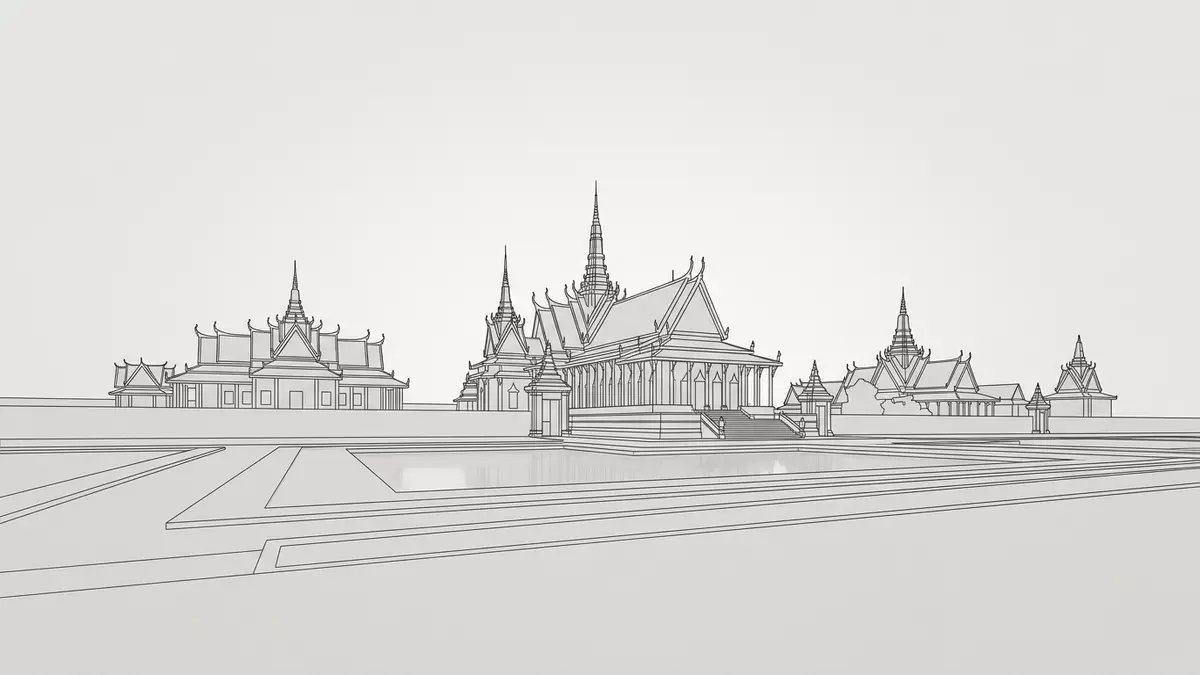
Preah Barum Reachea Veang Chaktomuk is Phnom Penh’s walled royal compound beside the meeting point of the Mekong and Tonlé Sap. Its visible identity comes from the contrast between pale boundary walls, tiered Khmer roofs, gilded spires and open courtyards around ceremonial halls.
Preah Barum Reachea Veang Chaktomuk beside Chaktomuk’s rivers
The palace stands along Samdech Sothearos Boulevard in central Phnom Penh. It occupies the western bank of the Mekong and Tonlé Sap at Chaktomuk, the river junction reflected in its full Khmer name.
The compound faces east towards the water. Its walls form a distinct edge beside the riverside promenade, while the National Museum of Cambodia lies close by on the inland side of the boulevard. Phnom Penh’s civic, religious and cultural landmarks gather around this central riverfront.
King Norodom and the nineteenth-century palace
The present palace took shape after King Norodom moved the royal capital from Oudong to Phnom Penh. Construction began in 1866, and the compound developed through the late nineteenth and early twentieth centuries.
The palace combines traditional Khmer architecture with European-influenced elements. Its roofs rise in tiers, pointed finials crown the principal buildings, and gilded decoration appears across façades and ceremonial structures. King Norodom’s palace belongs to the period when Phnom Penh became Cambodia’s royal capital.
The Throne Hall visible within the compound dates from the reign of King Sisowath. Its masonry structure replaced an earlier wooden hall, and its central tower remains a defining part of the palace skyline. The present Throne Hall was inaugurated in 1919.
Throne Hall, Silver Pagoda and royal courtyards
The Throne Hall is the ceremonial centre of the palace. Its interior contains royal thrones, gilded figures and ceiling paintings connected with Khmer court culture. Coronations, royal weddings and formal state ceremonies belong to its recorded functions.
South of the main palace stands the Silver Pagoda, officially called Preah Vihear Preah Keo Morakot and also known as Wat Preah Keo. Its temple floor is paved with silver tiles, while the interior contains Buddha images and other royal religious treasures.
The Silver Pagoda compound includes a cloister, courtyard, library, bell tower, stupas and a model of Angkor Wat. Murals of the Reamker cover the surrounding wall, linking the royal site with a major Khmer epic.
Other buildings include the Moonlight Pavilion, Khemarin Palace and smaller halls and pavilions. The Moonlight Pavilion stands beside the palace wall and has served as a setting for classical dance, royal addresses and formal occasions.
Visiting Preah Barum Reachea Veang Chaktomuk: what travellers from Western Europe should know
- Preah Barum Reachea Veang Chaktomuk stands on Samdech Sothearos Boulevard in central Phnom Penh, beside the Mekong and Tonlé Sap rivers at Chaktomuk.
- A visit involves walking across paved courtyards and between halls, pagodas, gardens and enclosed palace spaces.
- The National Museum of Cambodia lies close to the palace, while the riverside promenade runs along the eastern side of the compound.
- The official language is Khmer and the currency is the Cambodian riel.
- Entry requirements depend on your nationality; UK travellers can check the FCDO travel advice at gov.uk/foreign-travel-advice, Irish travellers the Department of Foreign Affairs at ireland.ie.
Searching for Preah Barum Reachea Veang Chaktomuk on social platforms
These links open searches for Preah Barum Reachea Veang Chaktomuk on each platform.
Frequently asked questions about Preah Barum Reachea Veang Chaktomuk
Where is Preah Barum Reachea Veang Chaktomuk?
It stands in central Phnom Penh along Samdech Sothearos Boulevard, beside the Mekong and Tonlé Sap rivers at Chaktomuk.
What can visitors see within the compound?
The compound contains the Throne Hall, Silver Pagoda, Moonlight Pavilion, courtyards, gardens, stupas and richly decorated Khmer buildings.
What makes the palace distinctive?
Its identity rests on the meeting of Khmer ceremonial architecture, silver-tiled religious space and a riverside setting at Phnom Penh’s principal river junction.


